


India can replace part of disrupted Gulf crude through alternative sourcing, but the adjustment is time-dependent and remains incomplete.
Data and analysis from Thurro’s platform suggests that Atlantic basin suppliers—routing cargoes around the Cape of Good Hope, bypassing Hormuz and Suez—can collectively provide approximately 0.8–1.5 million barrels per day (mb/d) within 30–60 days, equivalent to 15–25% of requirements. However, approximately 52% of petroleum import value remains linked to Hormuz-dependent supply, and substitution is constrained by shipping cycles rather than upstream availability.
The constraint is not the availability of crude, but the timing and throughput of delivery.
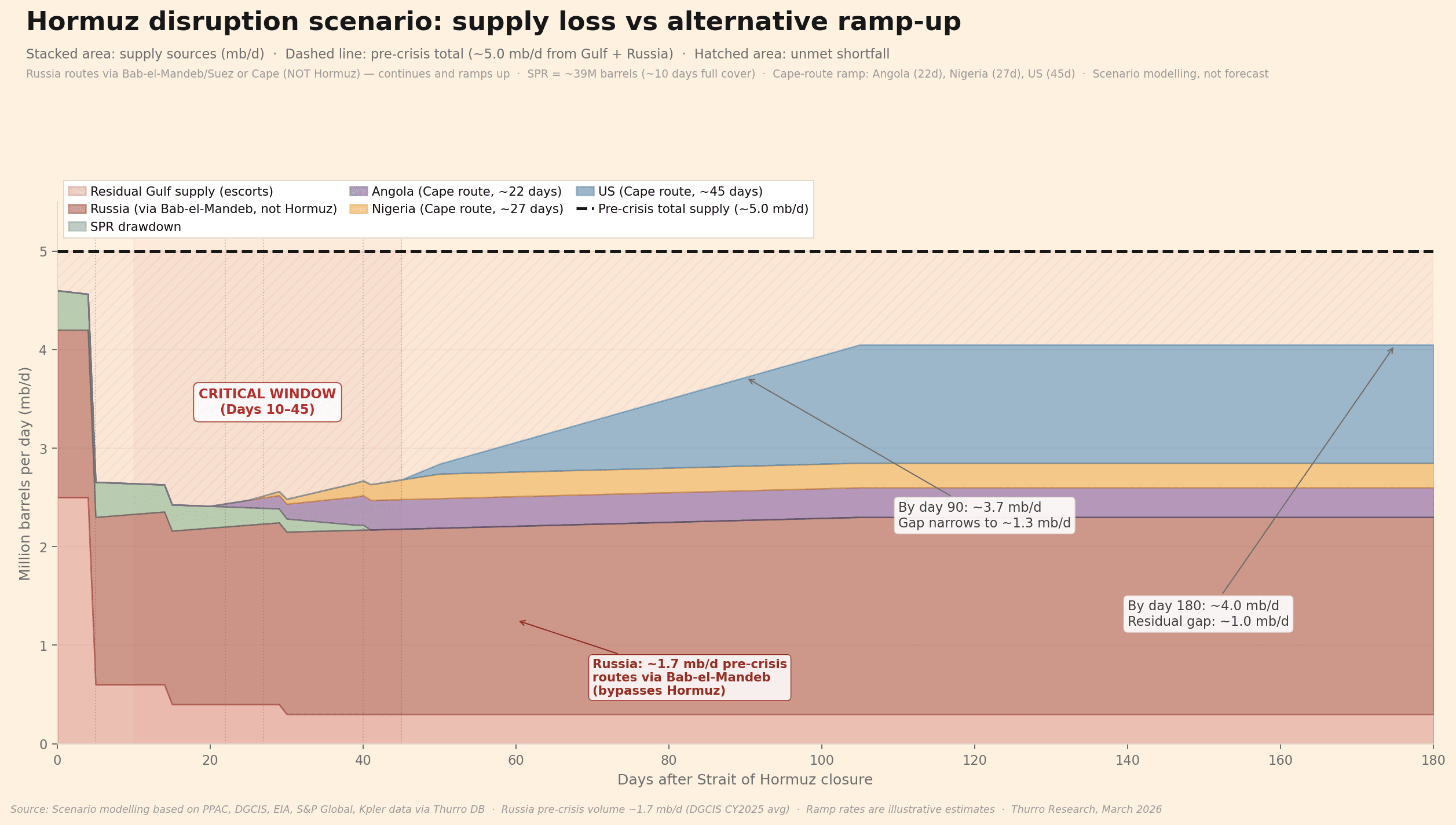
Illustration of supply loss and alternative supply ramp-up under a disruption scenario
Exposure is concentrated and systemically embedded
India imported 249 million tons of crude in CY2025, valued at USD 126 billion—the latest complete year of data. Total petroleum imports, which include crude and refined products such as diesel, petrol, LPG, and naphtha, were higher at approximately USD 180 billion. Domestic production of crude was 28 million tons, implying import dependence of approximately 89%.
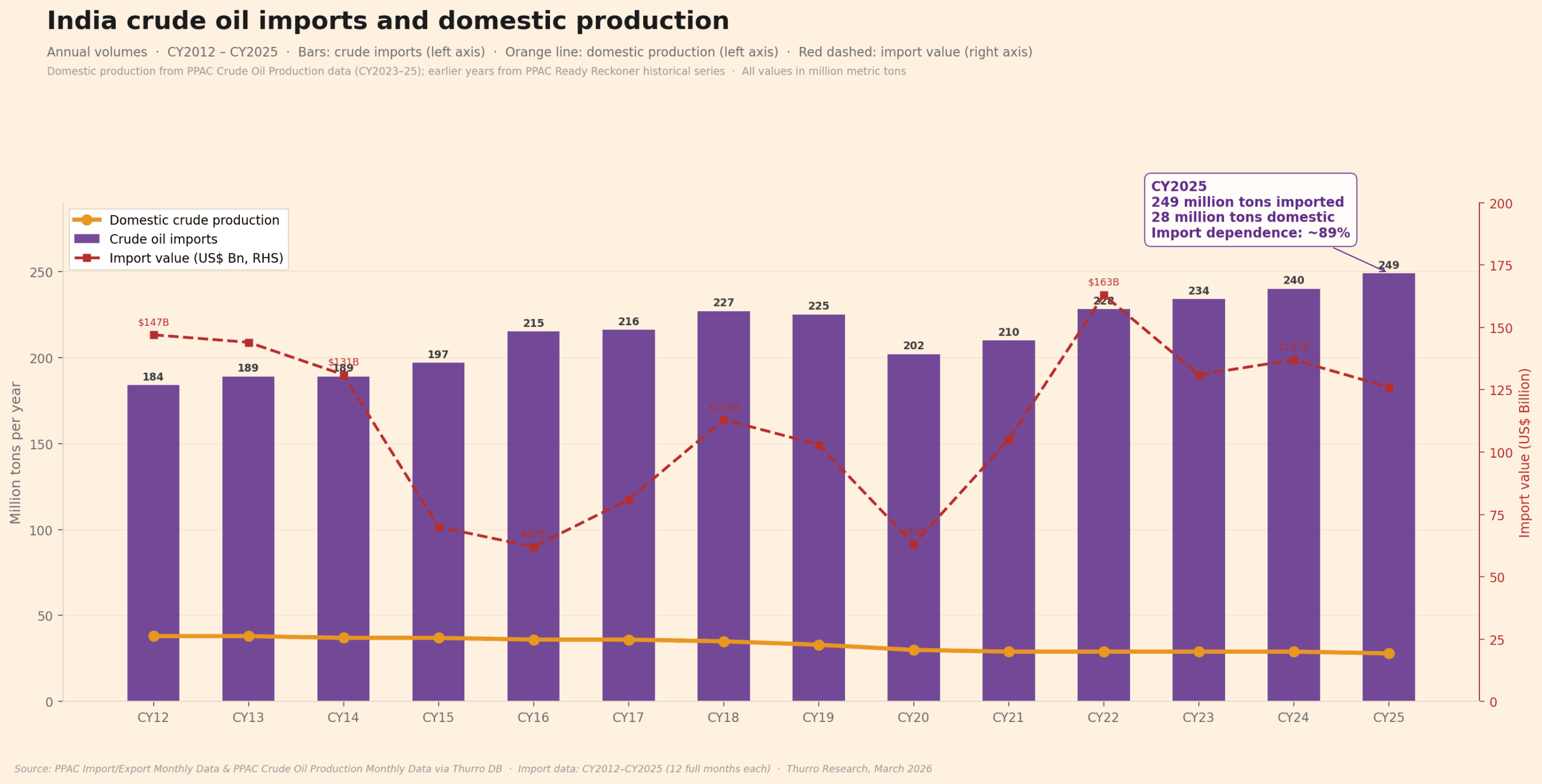
India’s crude imports and domestic production volumes over time
This dependence is concentrated across suppliers. Gulf producers—Iraq, Kuwait, Qatar, Saudi Arabia, and UAE—account for approximately 52% of petroleum import value, all transiting the Strait of Hormuz. Saudi Arabia can reroute part of its exports via Red Sea ports, but pipeline capacity, alternate chokepoints, and tanker availability constrain the scale of adjustment.
Russia, which accounts for roughly 30% of imports and routes via non-Hormuz pathways, provides a partial offset. The remaining supply remains exposed to geopolitical or logistics constraints.
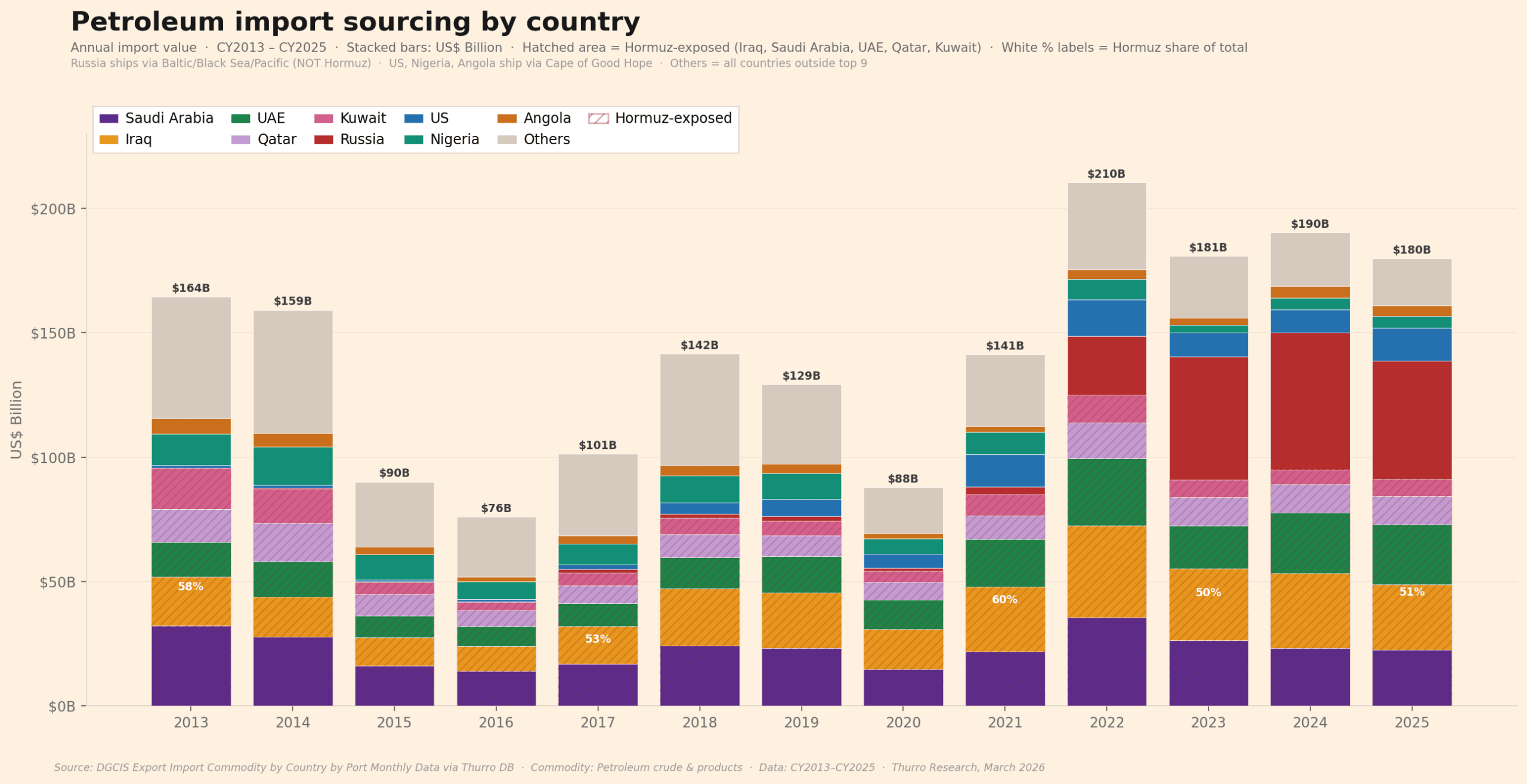
Breakdown of India’s petroleum imports (crude and refined products) by source country
The concentration is not just in supply. Data also shows that India’s west coast handles the majority of the imported crude. Ports on the western coast handle several times the petroleum import value of the east coast, reflecting the concentration of refining capacity along Gulf-facing routes.
This alignment across sourcing and infrastructure means disruption is transmitted through both channels. The system is configured for stable routing conditions rather than rapid reallocation.
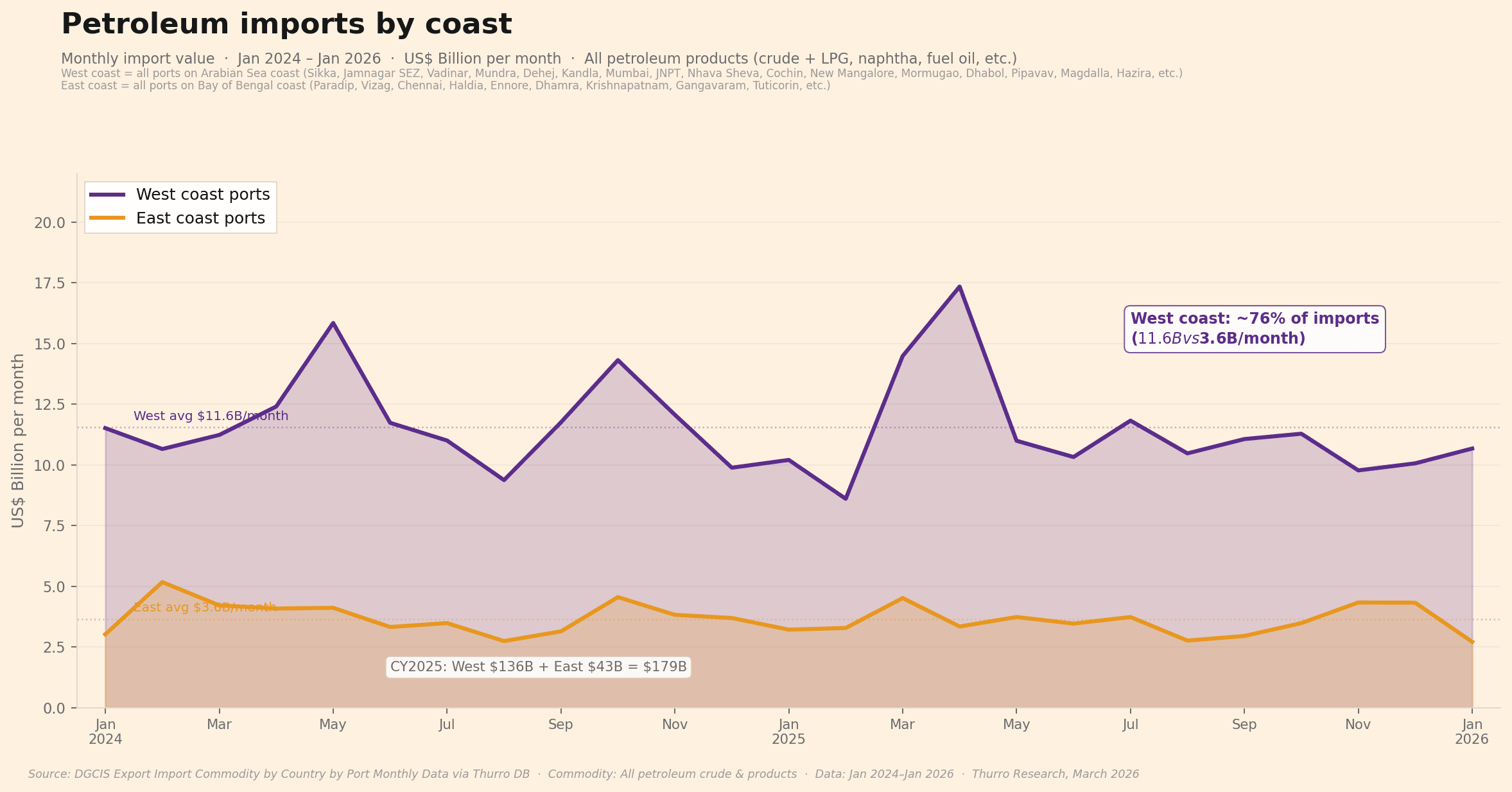
India’s petroleum imports (crude and refined products) by west and east coast ports
Alternative sourcing does not replicate Gulf supply
Cape-route suppliers provide a structurally different supply channel. All three—US, Nigeria, and Angola—bypass Hormuz, Suez, and the Red Sea, removing chokepoint risk.
However, they differ materially across scale, speed, and cost.
- The US offers 3–4 mb/d of spare export capacity but requires 40–45 days for delivery.
- Nigeria offers ~0.3 mb/d of spare capacity with 25–30-day delivery timelines, alongside operational risks.
- Angola offers ~0.1 mb/d of spare capacity with 20–25-day delivery timelines and lower freight costs.
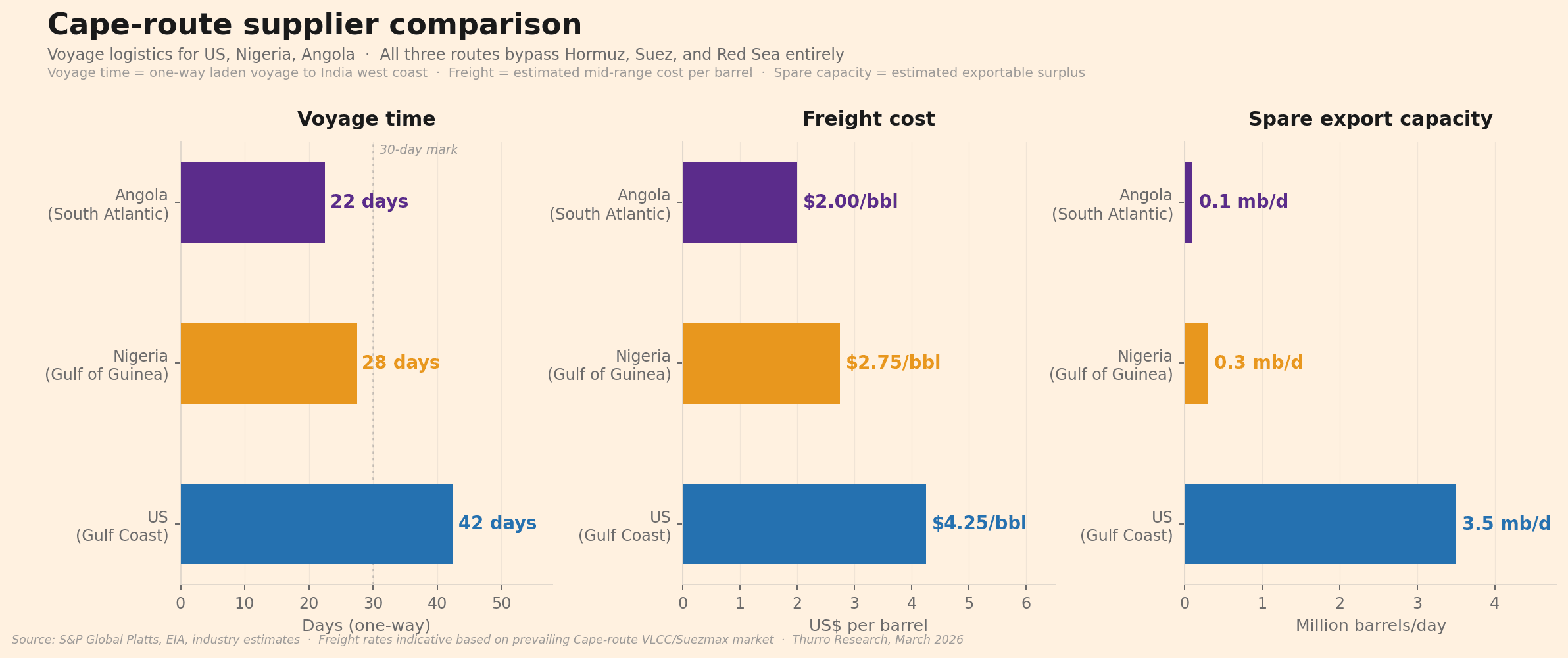
Comparison of voyage time, freight cost, and spare capacity across alternative suppliers
These suppliers do not replace Gulf supply on any single dimension. The US provides scale without speed. Angola provides speed without scale. Nigeria occupies an intermediate position but is capacity-constrained.
As a result, substitution is necessarily distributed across suppliers and cannot fully replace Gulf volumes within a short horizon. The feasible outcome is partial replacement, not equivalence.
The binding constraint is shipping capacity
The adjustment process is determined by tanker availability and voyage duration.
Cape-route shipments extend round-trip cycles to approximately 45–95 days, depending on origin. This ties up vessel capacity for longer periods and reduces effective fleet availability. At the same time, demand for compliant tankers has increased, as sanctions have constrained parts of the global fleet.
Charter rates for very large crude carriers (VLCCs)—supertankers that carry ~2 million barrels—have exceeded USD 400,000 per day, compared with typical levels of USD 25,000–45,000 per day. This reflects a sharp increase in demand for long-haul tanker capacity alongside reduced effective vessel availability as voyages lengthen, leading to cargo splitting and shifts in sourcing patterns.
These dynamics create a throughput constraint: even if crude is available at origin, it cannot be delivered at scale within a compressed timeframe. The system therefore adjusts through slower cargo cycles rather than immediate volume substitution.
Adjustment occurs over a defined time sequence
The supply response follows a phased sequence rather than an immediate shift.
In the initial phase, strategic petroleum reserves provide approximately 10 days of coverage. Between days 10 and 45, supply remains constrained as alternative cargoes are in transit. From around day 50 onward, alternative supply—particularly from the US—begins to scale.
In a 90-day disruption scenario, the residual shortfall remains approximately 1.2–1.3 mb/d, indicating that substitution remains incomplete even after adjustment.
This creates a defined adjustment window between depletion of reserves and arrival of replacement supply. During this period, the system relies on rerouting, inventory drawdown, and demand-side adjustment.
Infrastructure supports intake, but does not alter timing
India’s west coast infrastructure is capable of receiving diversified supply.
VLCC-capable terminals at Jamnagar, Mundra, and Vadinar, along with pipeline connectivity, enable intake and distribution of crude from multiple origins.
However, infrastructure operates at the receiving end of the system. It does not reduce voyage duration or expand tanker availability.
As a result, infrastructure enables substitution once cargoes arrive, but does not accelerate the adjustment process itself.
Near-term substitution remains constrained
India’s crude sourcing system can adjust to supply disruption through alternative routes, but the adjustment is time-dependent and constrained by shipping capacity. The feasible outcome is partial substitution over a 30–60-day horizon, rather than immediate replacement of Gulf volumes.
The binding constraint is the interval between disruption and delivery—specifically the 30–45-day period during which alternative supply is in transit and system inventories are being drawn down.
Cover photo credit: X/@Adaniports
View disclaimer
Unlock the power of alternative data
Do not just follow the market — stay ahead of it. Thurro helps you transform raw filings and alternative datasets into actionable insights.
Explore Thurro AltData Book a demoRelated Articles
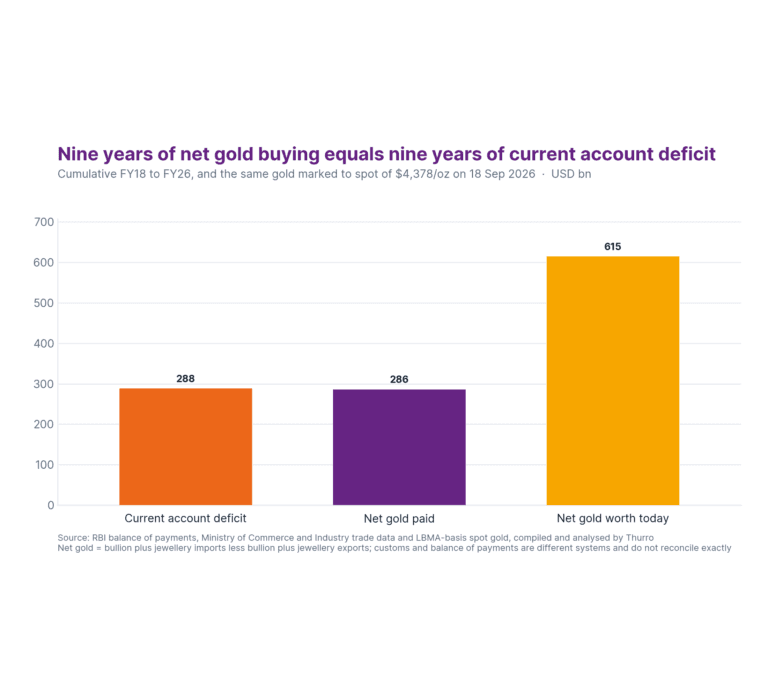
Nine years of net gold buying equals nine years of current account deficit — and it has doubled in value
India paid out $286bn for net gold between FY18 and FY26. Its cumulative current account deficit over the…
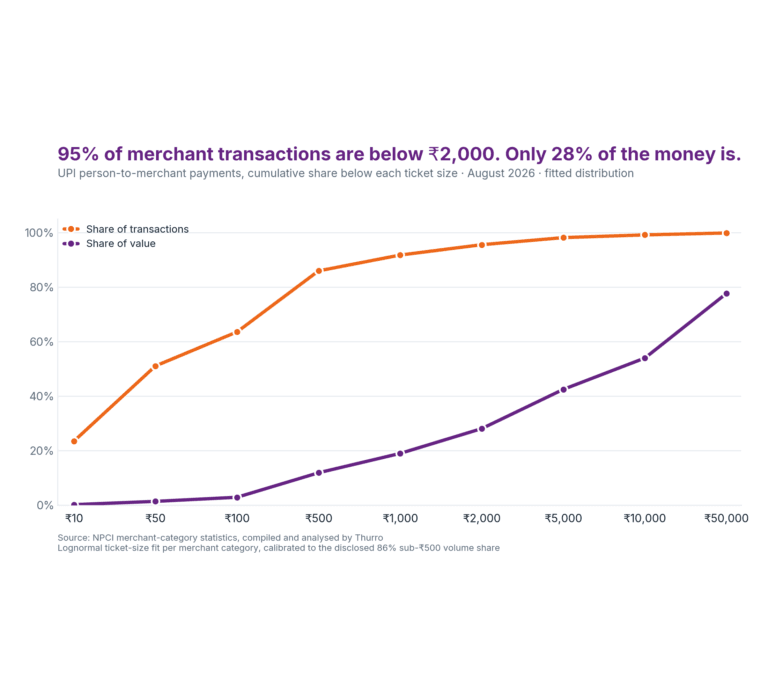
The UPI MDR pool is about ₹1,000 crore a month, and two-thirds of it sits where nobody can see it
Parliament has cleared the way for merchant charges on UPI. The merchant-category data says the revenue is real…
India’s commodity trade is running on price, not volume
India's trade value is still climbing — imports up about 18 percent and exports about 8 percent in…