

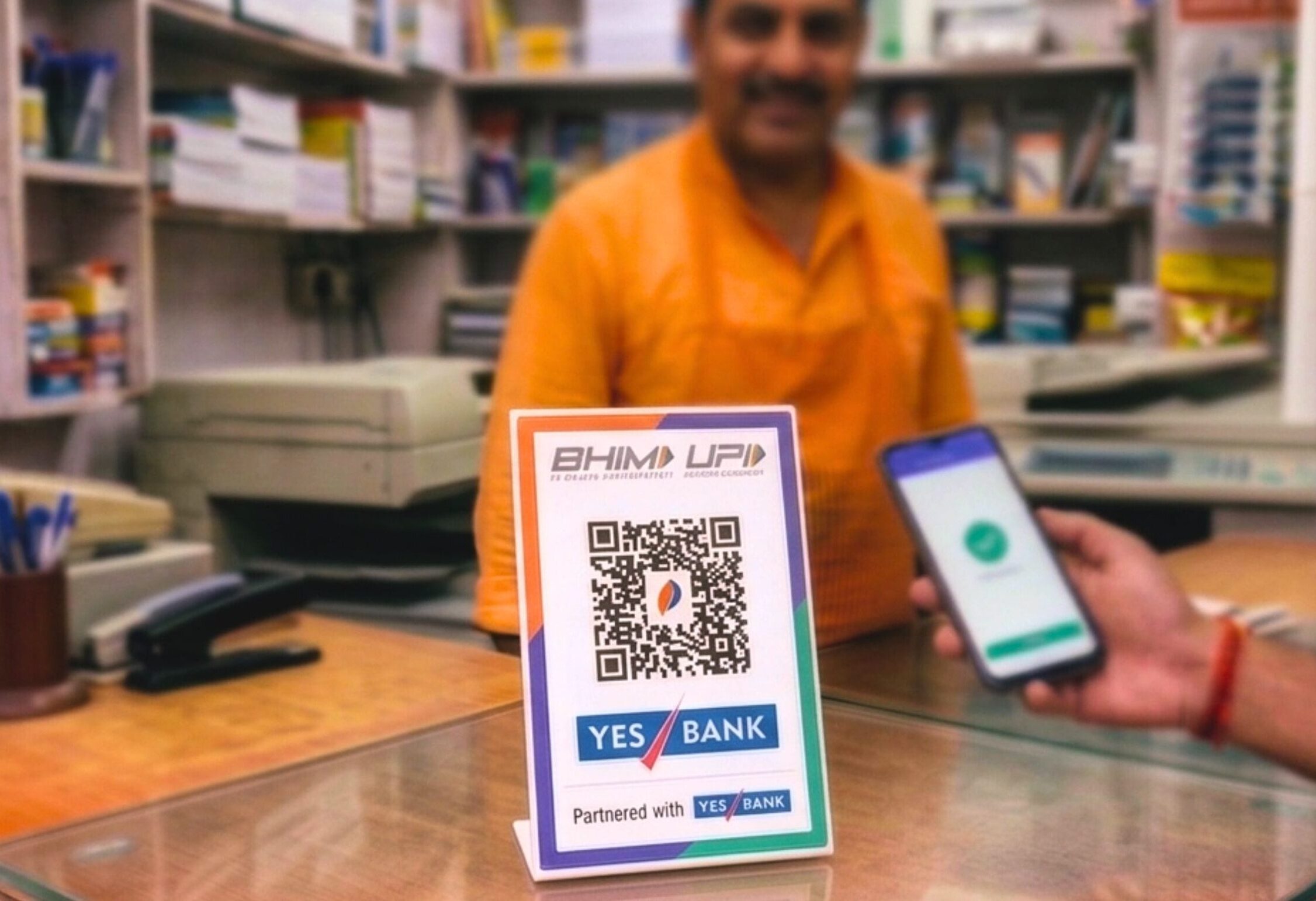

India’s digital payments system is built on interoperability. But the flow of money is not evenly distributed.
Data from Thurro’s platform shows that over the 12 months ending January 2026, Yes Bank processed 94.1 billion UPI inward remittance transactions, accounting for nearly 41% of total inward flows on the Unified Payments Interface. Axis Bank came a distant second with 23.7 billion transactions.
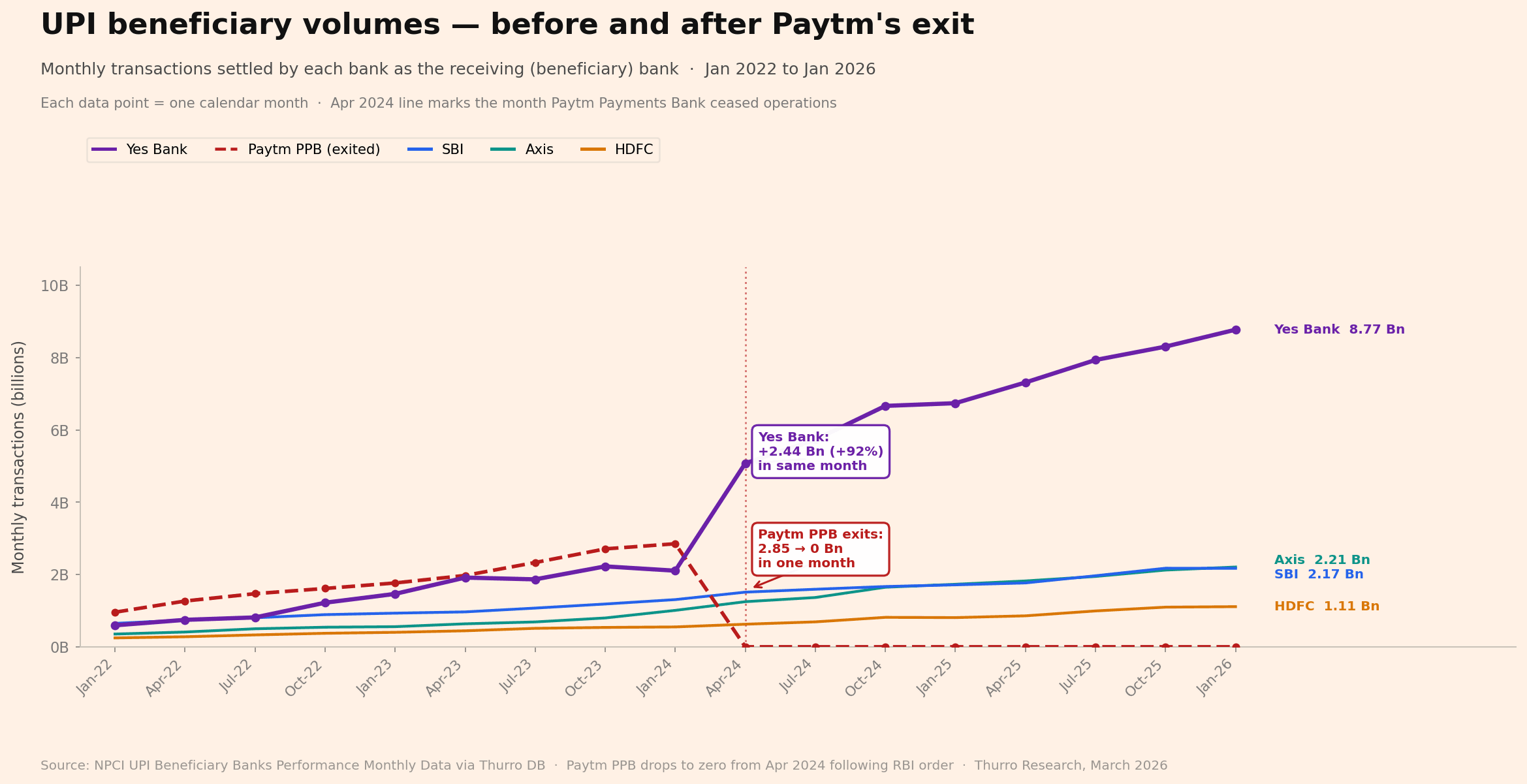
Monthly UPI inward transactions by bank
UPI operates in two layers. The first layer is user-facing, the app—Google Pay, PhonePe, Paytm, or any other UPI service provider. Beneath this is the bank layer, which is critical because the movement of money actually happens at the bank layer. Every transaction has a payer payment service provider (PSP) and a payee PSP at the two ends. As things turn out, Yes Bank is the payee PSP—the receiving bank—for a disproportionately large share of these transactions.
This concentration reflects how transactions are routed. Yes Bank’s inward-to-outward ratio stands at 50.8x, compared with sub-1x or near-balanced ratios for other banks. For Axis Bank, this ratio is 2.17x. The asymmetry indicates that most of its volumes originate from third-party platforms and merchant flows, rather than its own customer base. UPI share, in this case, is a function of backend positioning, not retail adoption.
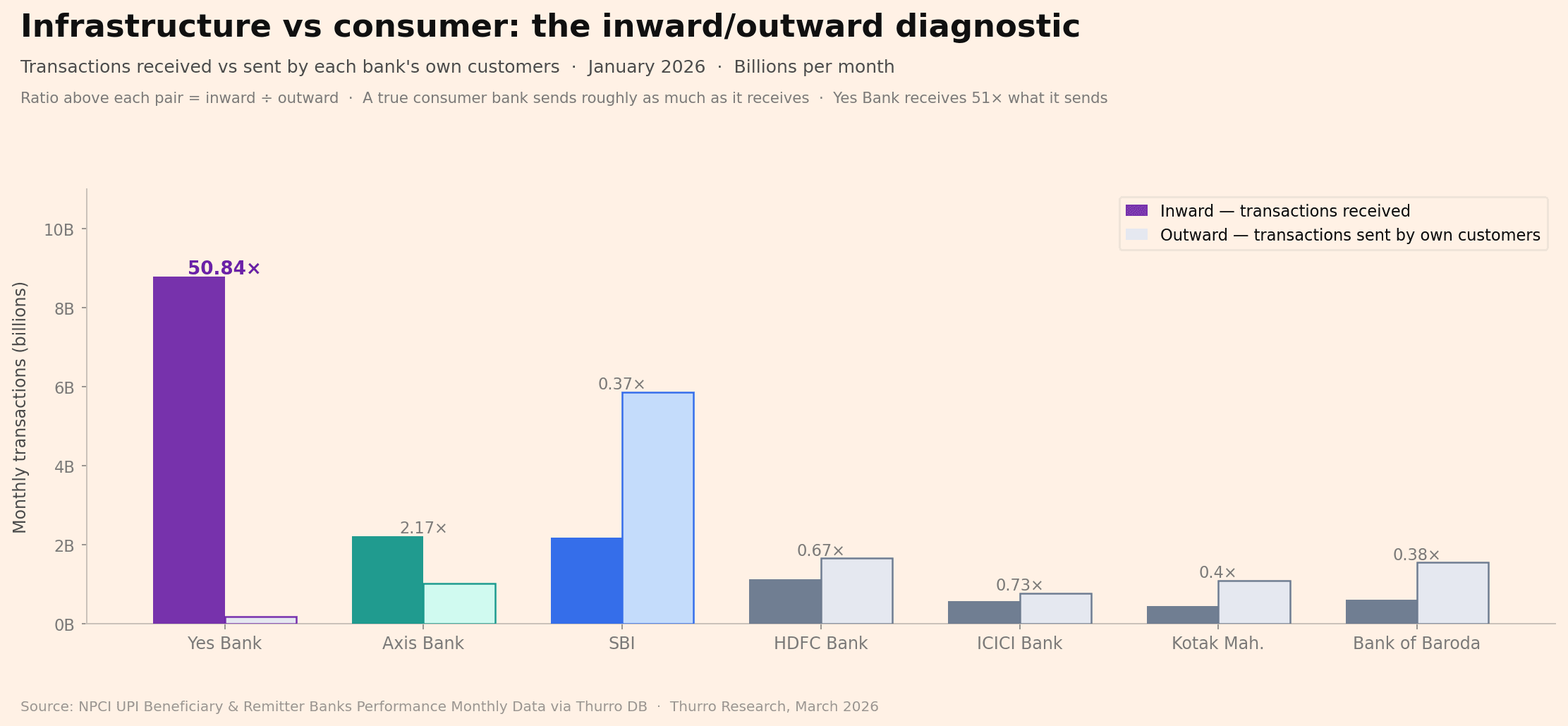
Inward-to-outward ratio of UPI transactions by bank
Historical numbers show that Yes Bank has consistently been the leading payee PSP, with a clear lead over its peers. However, the current structure emerged through a discrete shift. In April 2024, Yes Bank’s monthly inward volumes nearly doubled—from 2.6 billion to 5.1 billion transactions—marking a clear structural break. This coincided with regulatory restrictions on Paytm Payments Bank, which led to the migration of merchant accounts and settlement flows to alternative banking partners. The magnitude of the increase in Yes Bank’s volumes closely matches the disappearance of Paytm’s volumes in the same period, while the rest of the market remained flat. The data is consistent with a targeted rerouting of transactions rather than a broad-based increase in UPI activity.
A second structural factor is Yes Bank’s role as a backend payment service provider for large third-party applications, including PhonePe—the largest UPI app by transaction share—and other high-volume platforms. Given the scale of merchant payments within UPI, this creates a natural tendency towards concentration on the receiving side.
The economic impact of this position does not arise from transaction fees. UPI transactions are zero-fee for consumers and largely free for merchants under current rules. The value accrues through balance sheet effects.
First, high transaction throughput supports merchant acquisition and deepens platform relationships. These relationships translate into operating accounts and working capital balances. Yes Bank’s CASA deposits reached INR 994.8 billion in Q3 FY2026, up 8.5% year-on-year, with the CASA ratio improving to 34.0%. This lowers the bank’s cost of funds.
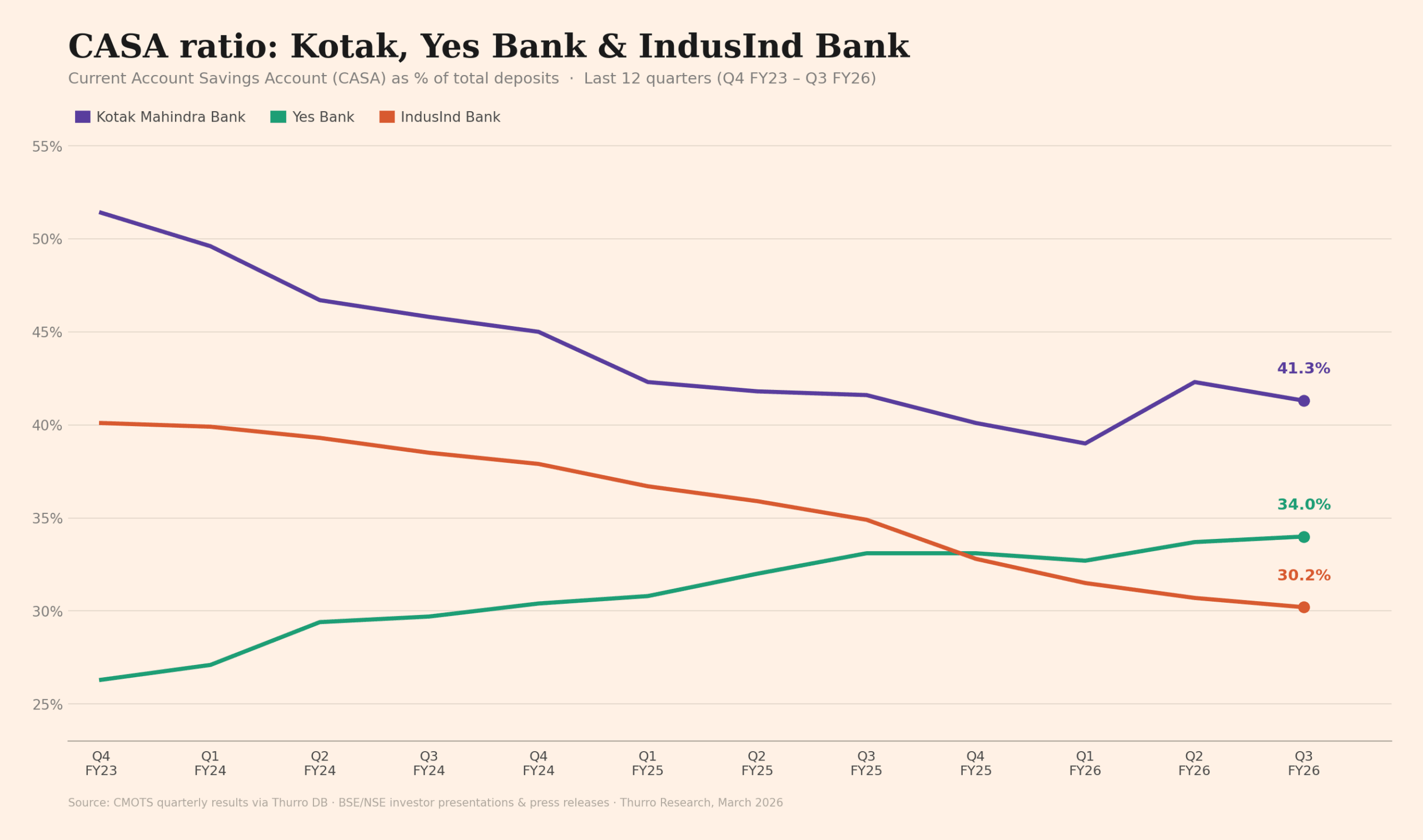
Trend in CASA ratios across Kotak Mahindra Bank, Yes Bank, and IndusInd Bank (Q4 FY2023–Q3 FY2026)
Second, the scale of daily settlement—running into hundreds of millions of transactions—creates continuous liquidity in the form of funds in transit. While not separately disclosed, this float contributes to funding stability and supports net interest margins.
Third, transaction-linked services—merchant solutions, APIs, and digital banking products—feed into fee income. Non-interest income rose to INR 16.3 billion in Q3 FY2026, up 8.0% year-on-year, while core fee income stood at INR 15.4 billion. These are not direct transaction revenues but adjacent monetisation channels enabled by volume.
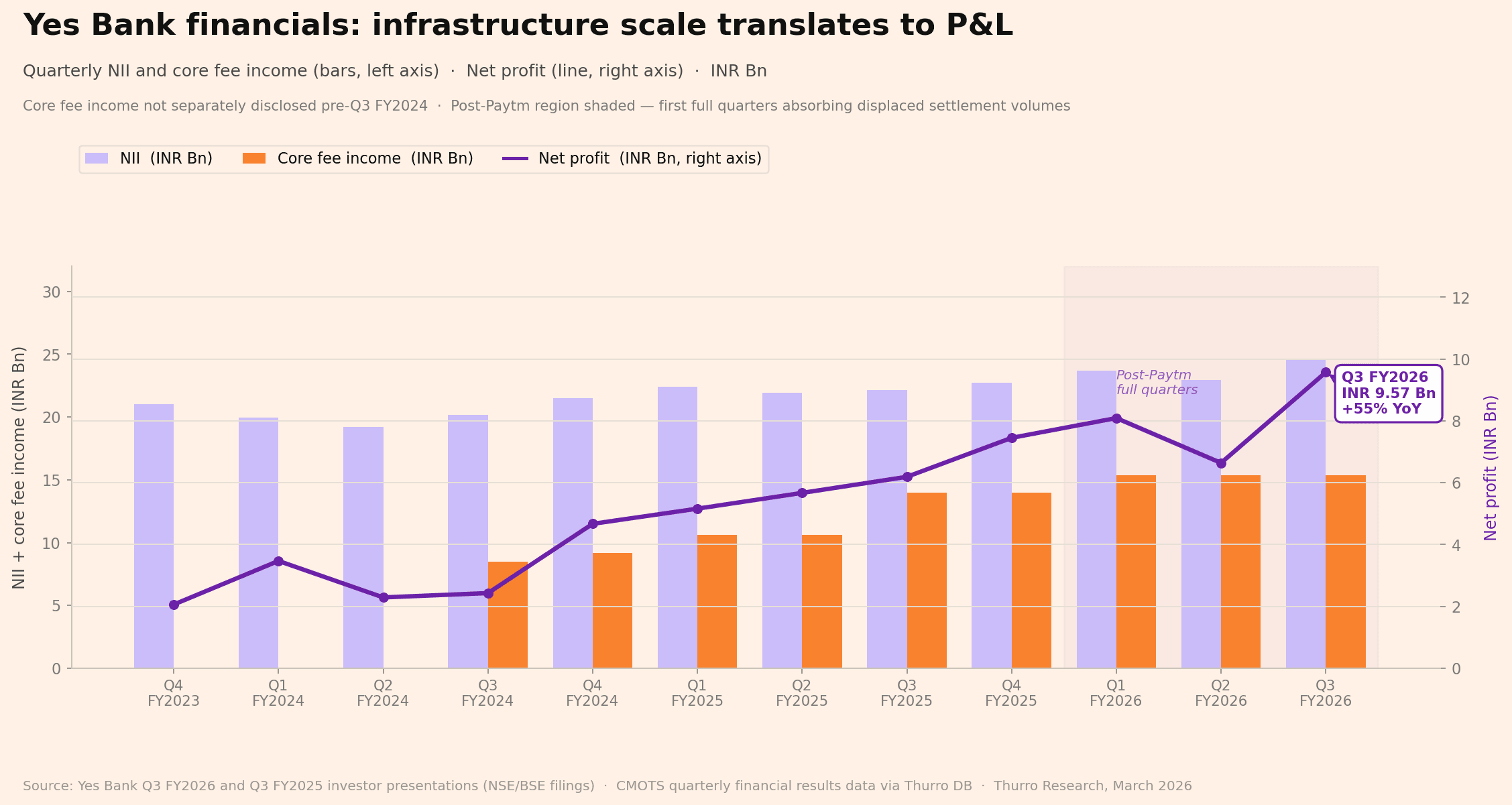
Quarterly trend in net interest income, fee income, and net profit for Yes Bank
Taken together, the mechanism is indirect. Transaction concentration does not translate into revenue per transaction. It improves deposit quality, funding costs, and cross-sell opportunities, which in turn support profitability.
The structure also introduces dependencies. A large share of UPI flows is tied to a small number of platforms and routing arrangements. The same dynamics that enabled rapid concentration—visible in the April 2024 shift—can operate in reverse. Changes in platform relationships or settlement configurations would likely result in similarly concentrated adjustments in flow distribution.
UPI’s design enables interoperability at the front end. At the back end, however, the system is more concentrated than it appears. Yes Bank’s position illustrates how scale at the settlement layer can reshape balance sheet dynamics, even when the underlying transactions carry no explicit fee.
Cover photo credit: AI generated image
View disclaimer
Unlock the power of alternative data
Do not just follow the market — stay ahead of it. Thurro helps you transform raw filings and alternative datasets into actionable insights.
Explore Thurro AltData Book a demoRelated Articles
Nine years of net gold buying equals nine years of current account deficit — and it has doubled in value
India paid out $286bn for net gold between FY18 and FY26. Its cumulative current account deficit over the…
The UPI MDR pool is about ₹1,000 crore a month, and two-thirds of it sits where nobody can see it
Parliament has cleared the way for merchant charges on UPI. The merchant-category data says the revenue is real…
India’s commodity trade is running on price, not volume
India's trade value is still climbing — imports up about 18 percent and exports about 8 percent in…