

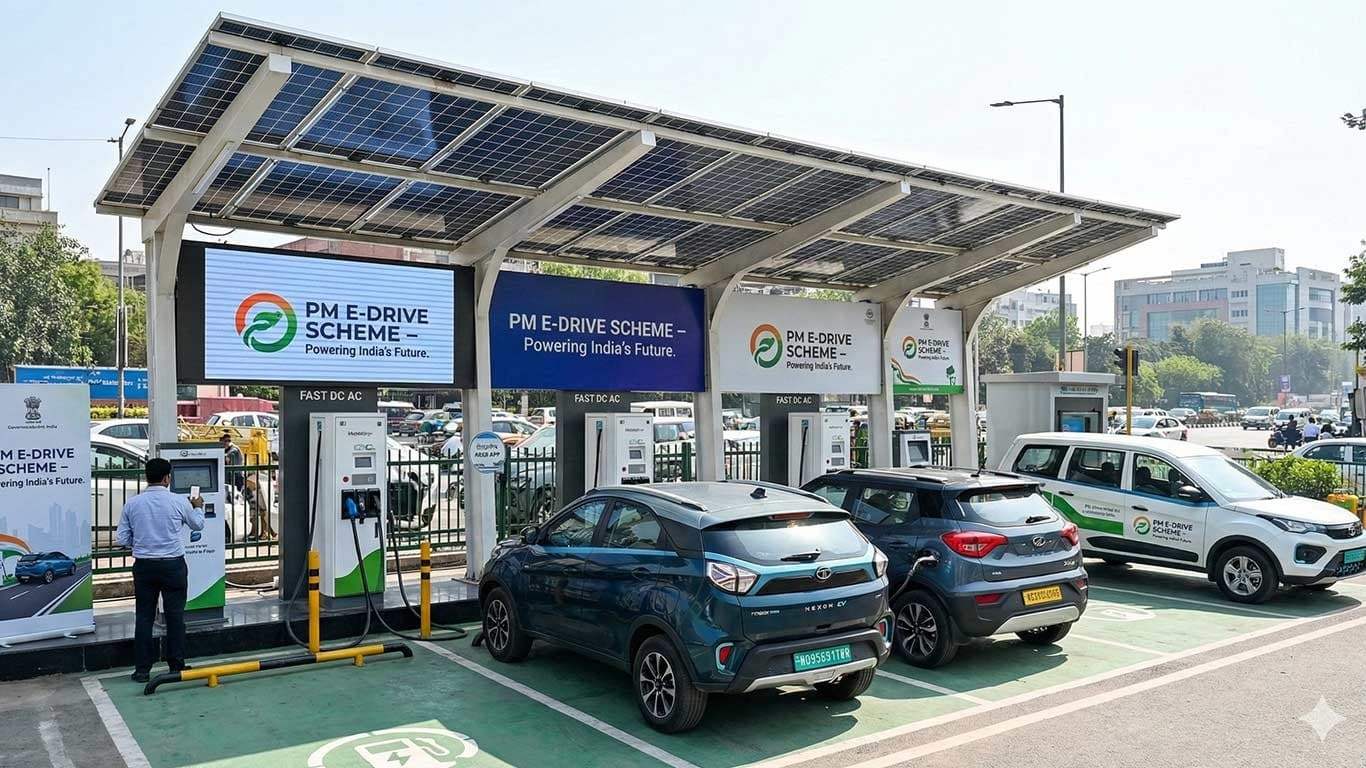

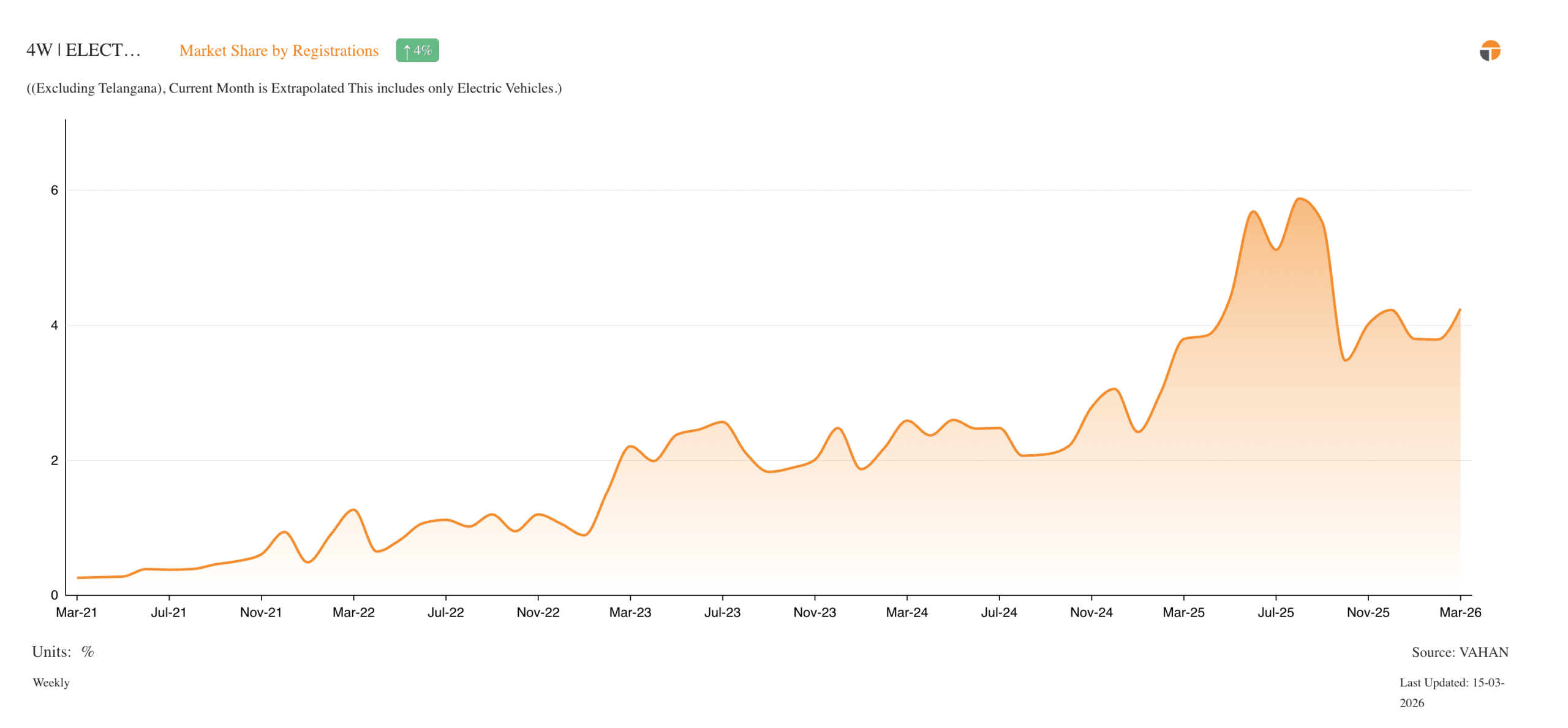
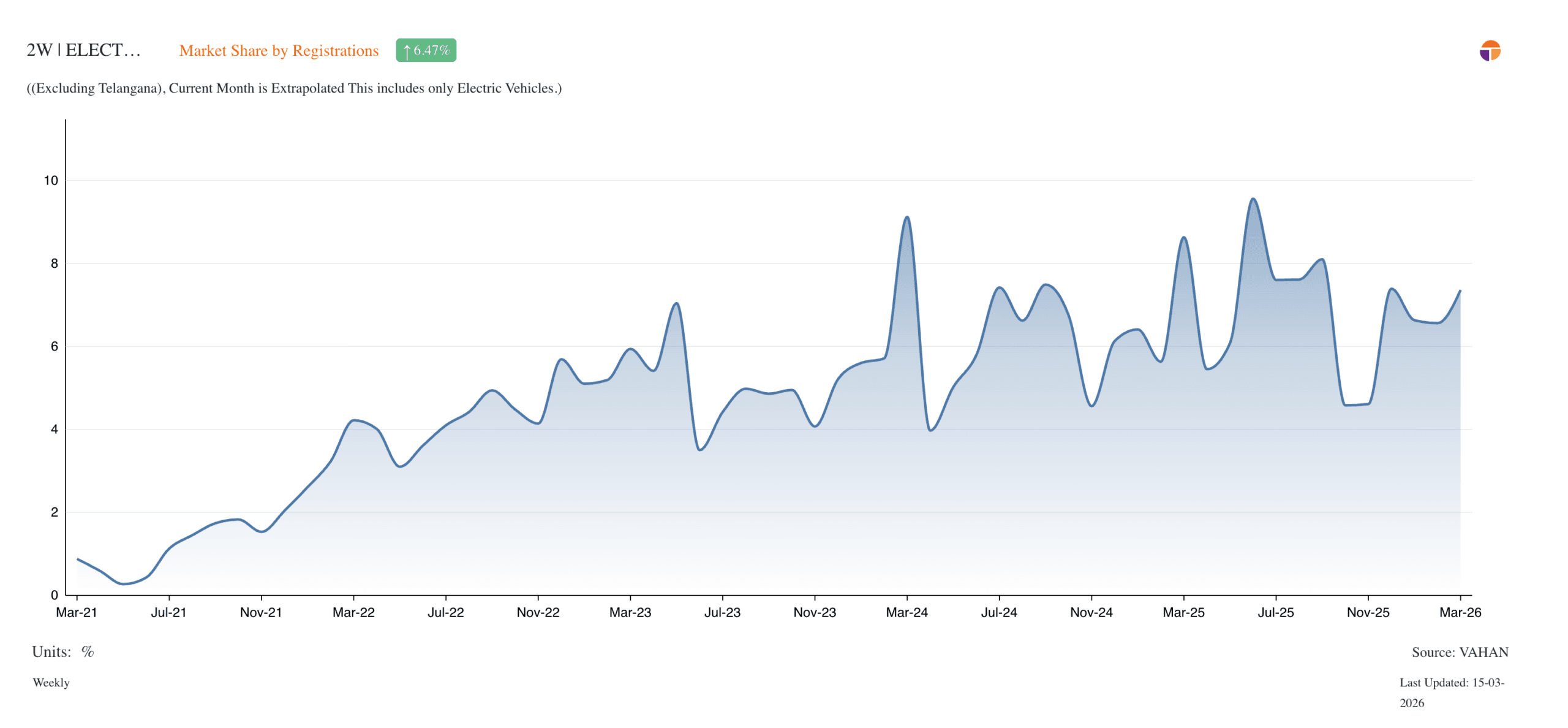
It has been a volatile six months for India’s electric vehicle (EV) industry. Data from Thurro’s platform shows that EV penetration increased gradually over the past two years, peaked around mid-2025, and has since declined, with a partial recovery underway. This breaks the idea of a smooth adoption curve, pointing instead to a policy- and price-driven cycle.
The correction is visible across segments, though with different magnitudes. In four-wheelers (4Ws), EV penetration peaked at roughly 4.5–5% in mid-2025, fell to nearly 3%, and has since recovered to the 3.5–4% range. In two-wheelers (2Ws), penetration peaked at 9–9.5% before declining and stabilising in the 6–8% band. Unlike 4Ws, where the movement is a drop followed by recovery, 2Ws show repeated reversion to a narrow range.
The shift aligns with changes in the relative economics between EVs and internal combustion engine (ICE) vehicles. A combination of subsidy tapering and GST-linked price corrections in ICE vehicles reduced the upfront price gap.
For example, under the Prime Minister Electric Drive Revolution in Innovative Vehicle Enhancement (PM E-DRIVE) scheme, which replaced the Faster Adoption and Manufacturing of (Hybrid and) Electric Vehicle (FAME II) scheme and came into effect in October 2024, subsidies for electric two-wheelers fell by 50% to INR 2,500 per kWh, with a cap of INR 5,000 per vehicle, starting April 2025.
The GST-related price adjustments in September 2025 reduced the effective tax differential between EVs and ICE vehicles. Petrol motorcycles (up to 350cc) and small cars (sub-1200cc petrol/1500cc diesel and sub-4m) moved to the 18% slab from 28%, while EVs remained at 5%. This narrowed the tax gap to around 13 percentage points from 23 percentage points earlier. For small cars, the removal of the 1–3% compensation cess made ICE vehicles more lucrative.
At the same time, manufacturers stepped up discounting and financing schemes, further improving ICE affordability. As a result, the economic case for EVs weakened at the margin.
Other factors appear to have compounded this effect. In 2Ws, after-sales and reliability concerns, particularly around service delays and product quality, appear to have an impact on consumer confidence.
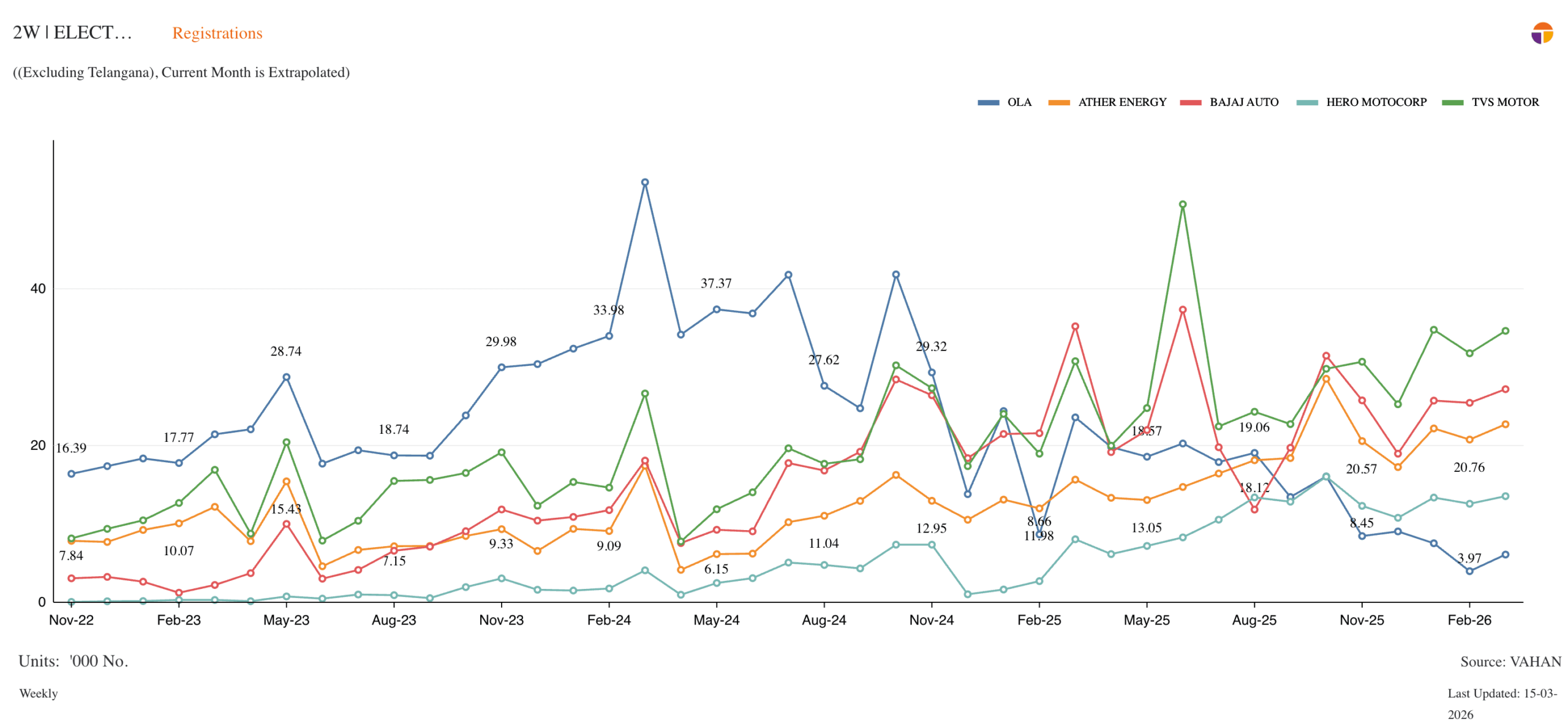
This is also reflected in market share trends within the segment. Within segments, adoption trends are uneven, with market share fluctuating, particularly in the E2W category. For example, Ola Electric, which was once the market leader, has seen a decline in market share. More broadly, the trend points to increasing concentration among established OEMs with larger service and distribution networks—for example, TVS and Bajaj in two-wheelers, and Tata and Mahindra in four-wheelers.
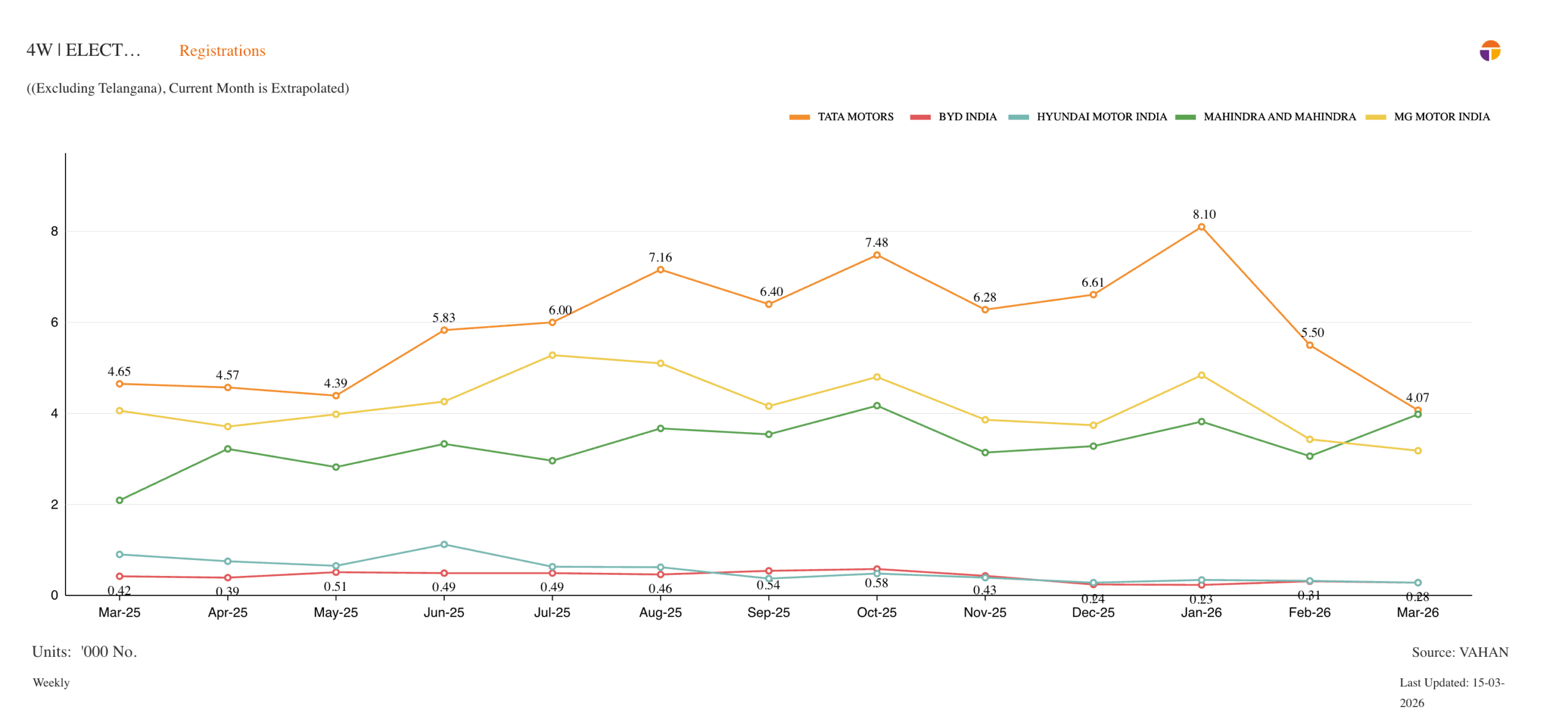
Taken together, the data suggests that EV adoption has moved past the initial acceleration phase. With the relative cost advantage no longer improving, penetration has corrected and is now stabilising at lower levels.
The next phase of adoption will depend on whether the economic proposition improves again. Battery costs are a key variable to monitor, given their large share in total EV costs. A sustained decline in battery prices would improve upfront affordability and could support a renewed increase in penetration.
That said, there is limited visibility on the timing or magnitude of such declines. If battery costs remain stable, and no offsetting policy support emerges, EV penetration is likely to remain range-bound at current levels.
Cover photo credit: KNN Times
View disclaimer
Unlock the power of alternative data
Do not just follow the market — stay ahead of it. Thurro helps you transform raw filings and alternative datasets into actionable insights.
Explore Thurro AltData Book a demoRelated Articles
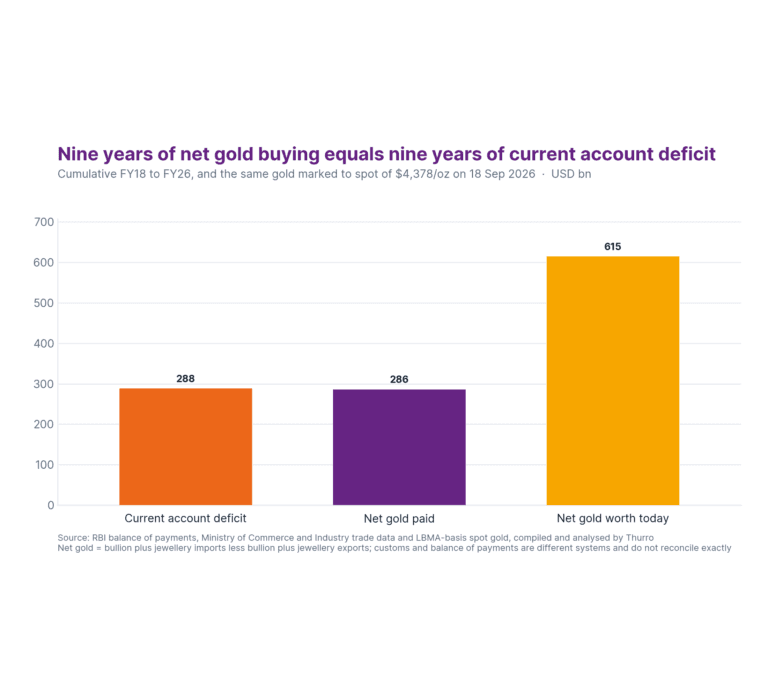
Nine years of net gold buying equals nine years of current account deficit — and it has doubled in value
India paid out $286bn for net gold between FY18 and FY26. Its cumulative current account deficit over the…
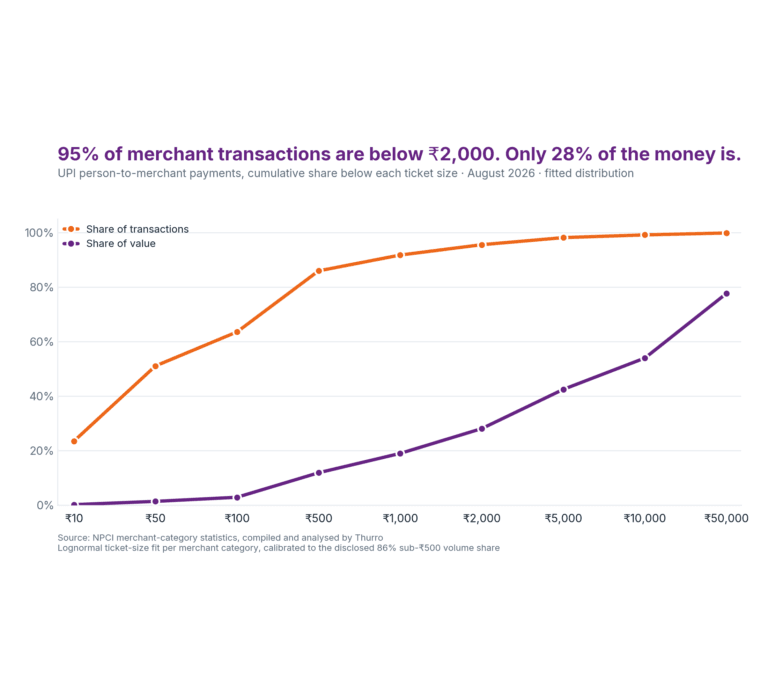
The UPI MDR pool is about ₹1,000 crore a month, and two-thirds of it sits where nobody can see it
Parliament has cleared the way for merchant charges on UPI. The merchant-category data says the revenue is real…
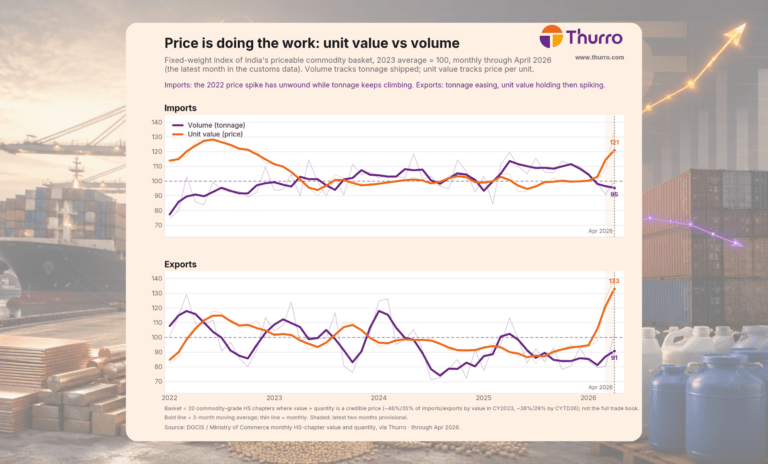
India’s commodity trade is running on price, not volume
India's trade value is still climbing — imports up about 18 percent and exports about 8 percent in…