

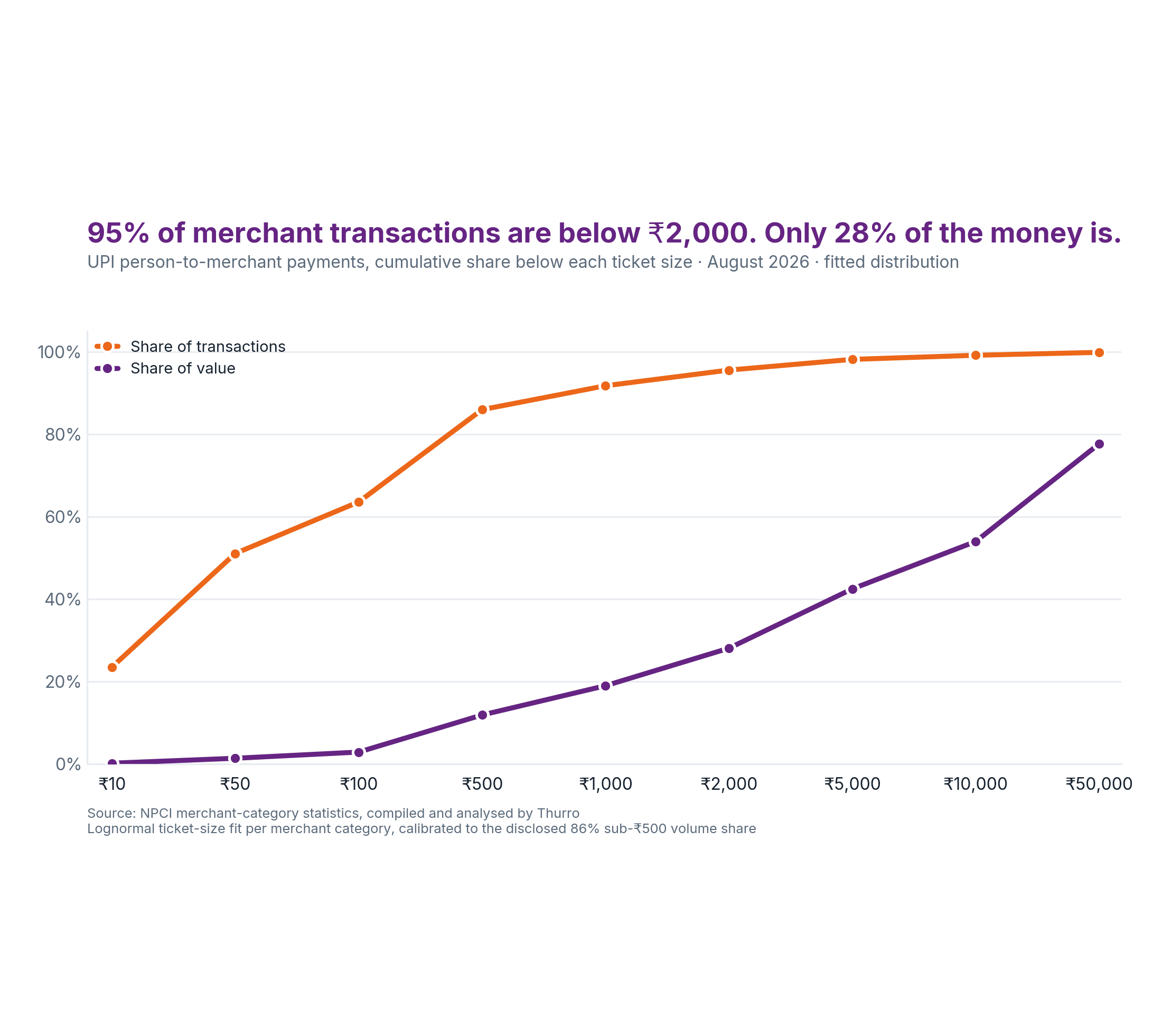

- NPCI publishes UPI merchant payments by category every month, and the volumes reconcile exactly to the headline person-to-merchant totals — which means the merchant discount rate base can be sized before the first rupee is charged.
- At the widely reported terms of 0.40% above ₹2,000, we estimate the chargeable pool at ₹3.4 lakh crore a month and monthly MDR at ₹820 to ₹1,370 crore — roughly ₹10,000 to ₹16,000 crore a year, on 4.4% of merchant transactions carrying 72% of merchant value.
- The base is not retail India. Two-thirds of it sits inside NPCI’s unclassified ‘others’ bucket, so both the revenue case for acquirers and the political case for the levy rest on a category that is not disclosed.
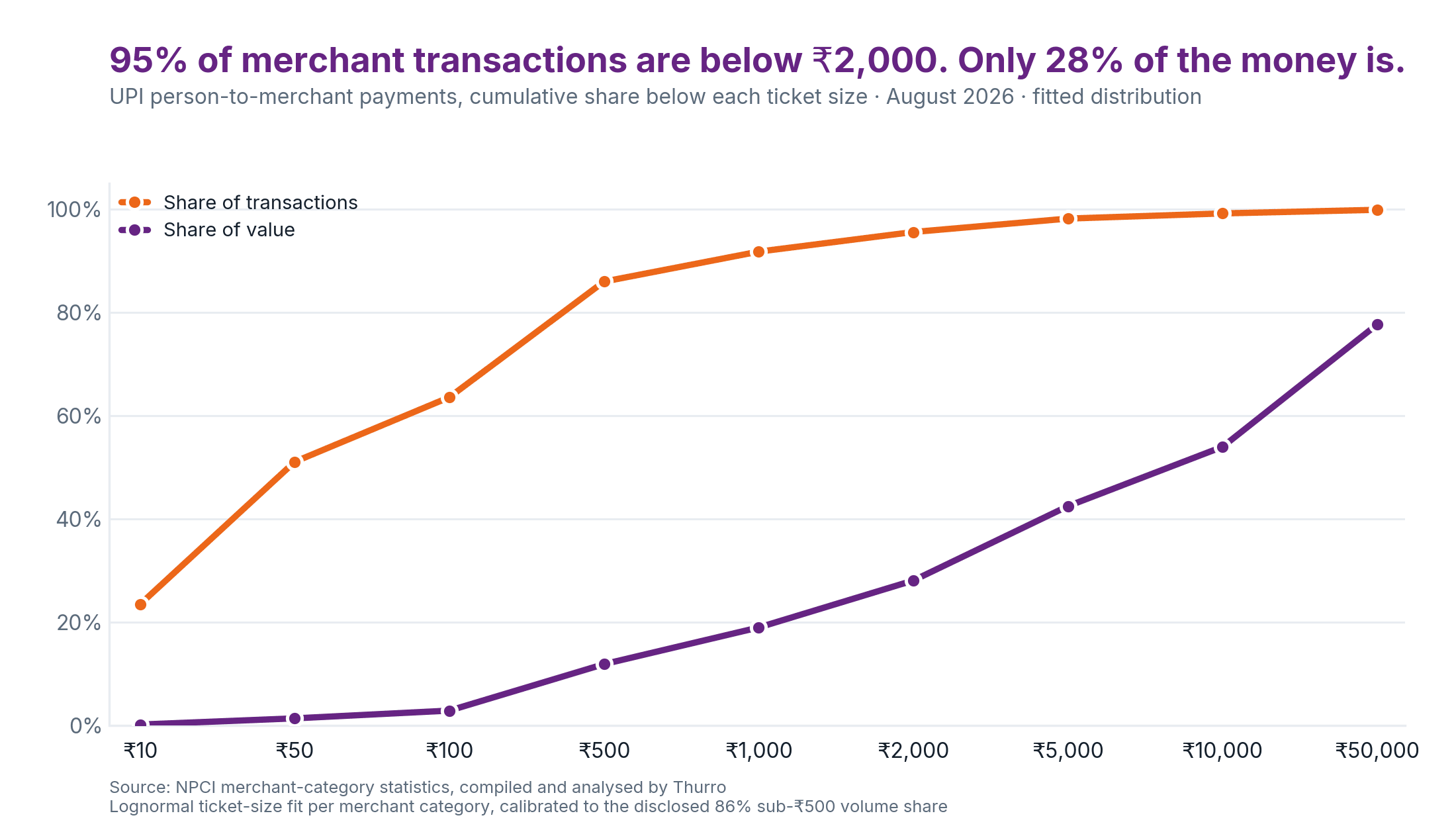
The threshold protects almost every transaction and almost none of the money. At ₹2,000, 95.6% of merchant transactions are already below the line — but only 28% of the value is.
After six years of zero merchant discount rate on UPI, the government has amended the Payment and Settlement Systems Act to allow one. Reported terms are 0.40% on merchant payments above ₹2,000, with carve-outs for essential services and capital market transactions. The immediate debate has been political — whether small merchants are hit, whether this is a subsidy being withdrawn. The commercially interesting question is simpler and unasked: how much money is actually in this. NPCI’s monthly merchant-category statistics are enough to answer it, because they reconcile exactly to the published person-to-merchant totals. What they do not give is a ticket-size distribution, and that is where the argument lives.
The finding
In August 2026, UPI carried ₹8.95 lakh crore of merchant payments across 15,510 million transactions — an average ticket of ₹577. That average is the trap. UPI is two payment systems wearing one name: a very large number of very small payments, and a small number of very large ones that carry most of the money.
To split them we fit a ticket-size distribution to each of the 30 merchant categories NPCI publishes, anchored on each category’s own disclosed average ticket, and calibrated so the aggregate reproduces the one distributional fact the government has released — that 86% of merchant transactions in FY2026 were below ₹500. The result is the hero chart. At the ₹2,000 threshold, 95.6% of transactions sit below the line and only 28.1% of value does.
That single number reconciles two claims that have been argued past each other. The government’s assurance that the vast majority of merchant transactions stay free is true — comfortably so. It is also close to irrelevant to the revenue, because 72% of the money sits above the threshold. Applying 0.40% to that pool, stripping out the categories a reasonable reading of ‘essential services and capital markets’ would exempt, plus loan repayment flows, gives a chargeable base of roughly ₹3.4 lakh crore and MDR of ₹820 to ₹1,370 crore a month. Annualised, ₹10,000 to ₹16,000 crore — against the ₹1,500 crore a year the exchequer had been spending to subsidise the same payments.
Two framing points follow. First, this is not government revenue. MDR accrues to the acquiring bank, the payment service provider and the issuer; the exchequer’s take is the goods and services tax on it, which on our range is ₹150 to ₹250 crore a month. Second, the levy lands on roughly 690 million transactions a month — about 23 million a day. That is a large enough number of merchant interactions to matter for acceptance behaviour, and small enough that any meaningful migration away from UPI at the top of the ticket range would take a visible bite out of the pool.
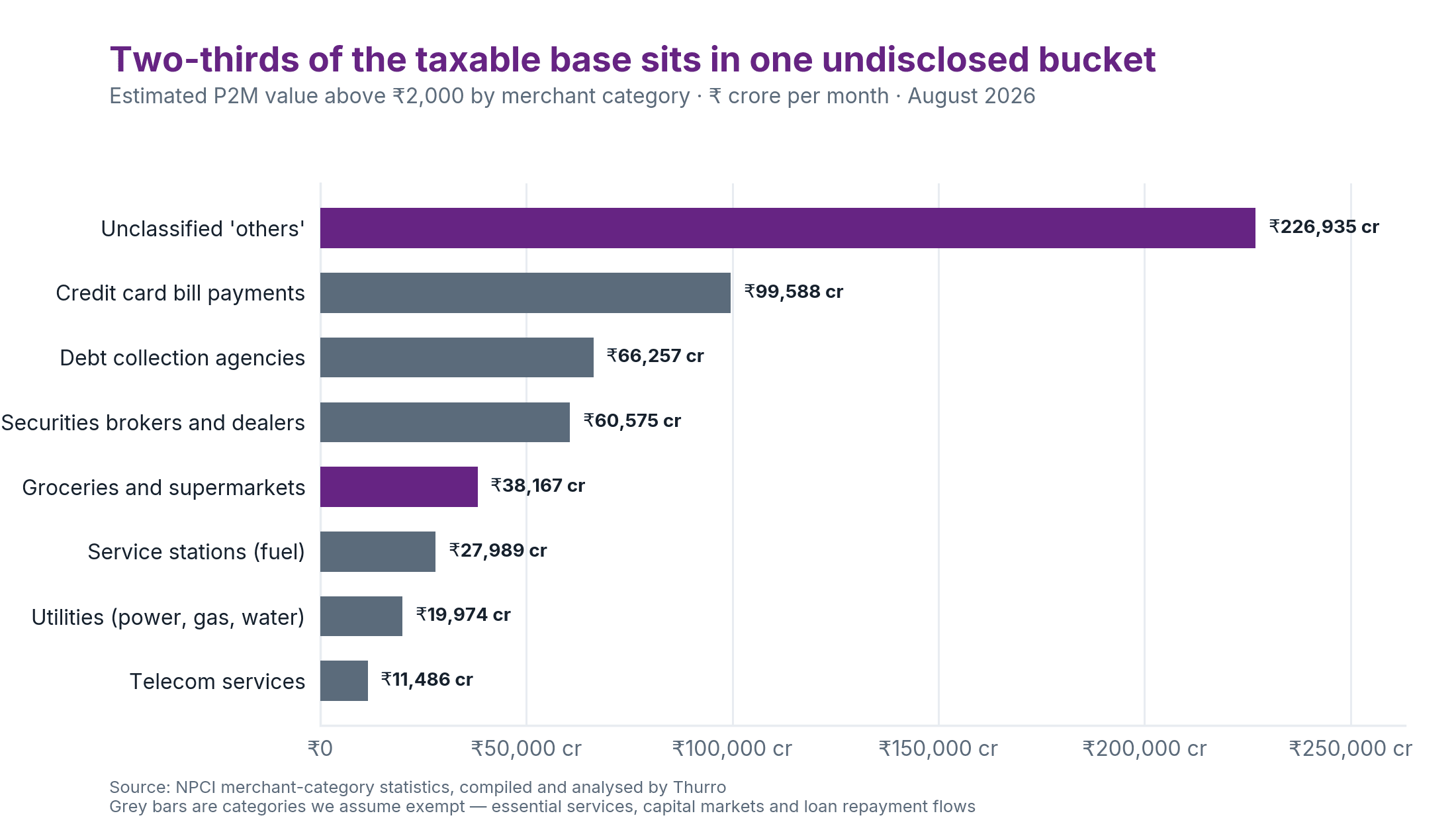
Objection one: surely this is broad-based retail revenue. It is not. The single largest contributor to the chargeable pool is a category with no name.
The concentration is the story. Of the ₹3.4 lakh crore chargeable pool, ₹2.27 lakh crore sits in NPCI’s unclassified ‘others’ — 46% of all merchant value, with an average ticket of ₹1,049 and no published composition. Groceries, at ₹38,000 crore, is the only named chargeable category of any consequence. Everything else large is either exempt by the reported rules or is a loan repayment flow.
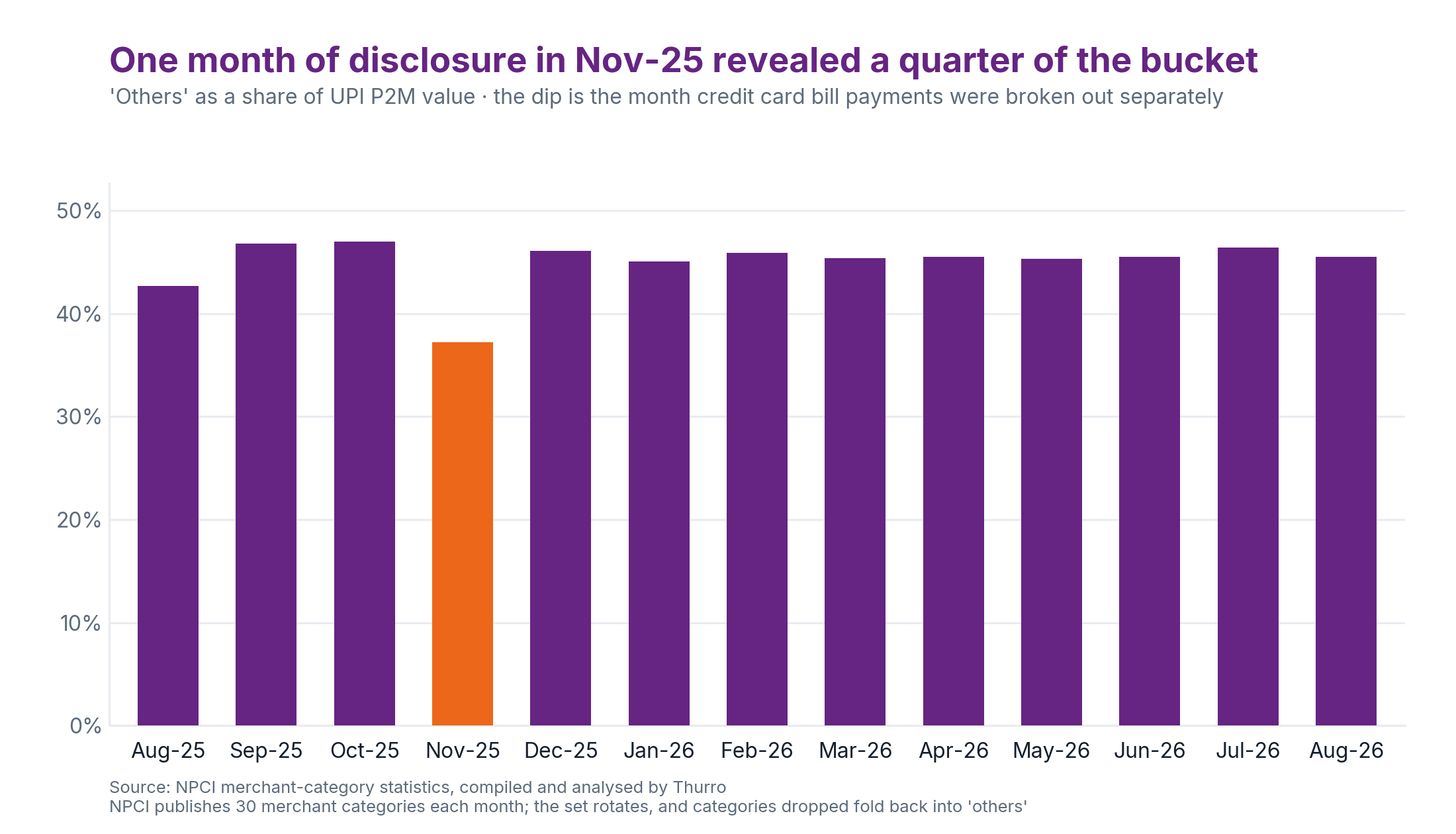
Objection two: is ‘others’ simply unknowable? Partly. NPCI rotates which 30 categories it publishes, and the rotation leaks.
In November 2025, credit card bill payments appeared in the published set once: ₹86,991 crore on 58 million transactions, an average ticket of ₹14,960. That month ‘others’ collapsed to 37.2% of merchant value against 45 to 47% in every other month. Grossed up for growth, credit card bills are roughly ₹1.02 lakh crore, a quarter of today’s ‘others’. We treat them as exempt, on the same logic as debt collection — both are high-ticket repayments to financial institutions, and both are the flows most likely to migrate to NEFT or direct debit the day a charge appears. Strip them out and the residual ‘others’ has a ₹1,049 average ticket: ordinary commerce, and chargeable.
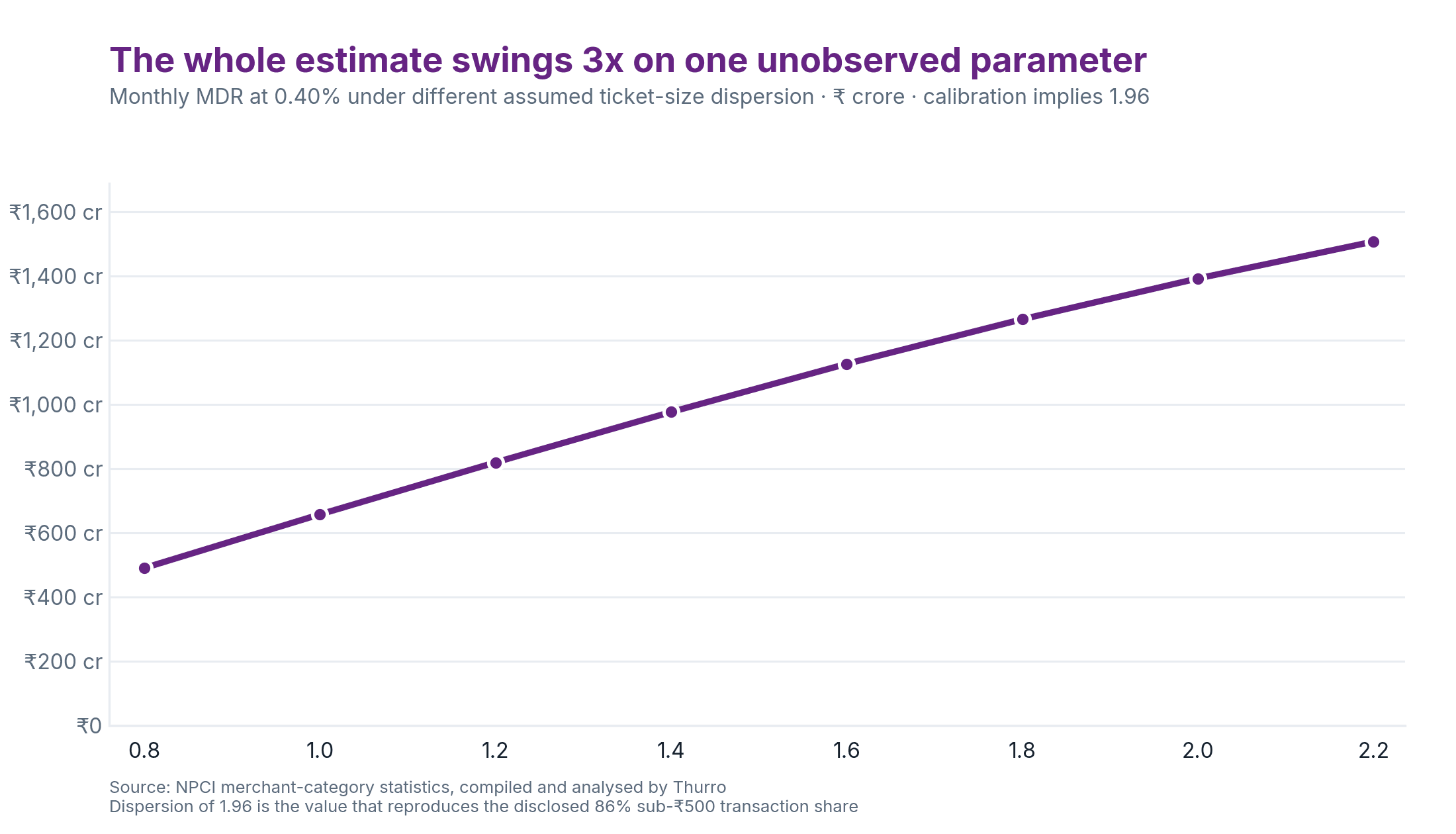
Objection three: isn’t this just an artefact of the fit? Largely, yes — and we would rather show the swing than hide it.
One parameter — the dispersion of ticket sizes within a category — moves the answer threefold. The calibrated value of 1.96 is what reproduces the disclosed sub-₹500 share, but it implies a median grocery basket of ₹32, which is not credible. A tighter fit is more plausible per category and misses the aggregate. That tension is unresolvable with published data, and it is why we quote a range rather than a point.
Vast majority of the transactions will remain free of charge for merchants on UPI. MDR, if introduced, will only be threshold based and not blanketly levied to all.
Ministry of Finance, ‘No charges for UPI users’, 8 August 2026
What to watch
Watch whether NPCI keeps credit card bill payments out of its published set. That one disclosure decision determines whether the MDR base is legible to the market or not, and it is the difference between a ₹500 crore and a ₹1,400 crore monthly number. Watch, too, for migration: if high-ticket repayment and marketplace flows shift to NEFT, RTGS or direct debit in the first two quarters of the levy, the realised collection will land well under any static estimate — and the acquirer business cases being written today on 0.40% of a ₹3.4 lakh crore pool will need rewriting.
Sources and method
- Source: NPCI merchant-category and person-to-merchant statistics, January 2022 to August 2026, compiled and analysed by Thurro
- Source: Ministry of Finance press releases on UPI charges and the Payment and Settlement Systems Act amendment (8 August 2026), and on UPI transaction distribution by ticket size, compiled and analysed by Thurro
- Method: the 0.40% rate and ₹2,000 threshold are as reported in the press and are not, to our knowledge, formally notified — we have taken them as given. Ticket-size distributions are fitted, not observed: a lognormal per merchant category anchored on each category’s disclosed average ticket, with one shared dispersion calibrated to the disclosed 86% sub-₹500 volume share. The exemption list is our reading of ‘essential services and capital market transactions’ plus loan repayment flows, not an official list.
Unlock the power of alternative data
Do not just follow the market — stay ahead of it. Thurro helps you transform raw filings and alternative datasets into actionable insights.
Explore Thurro AltData Book a demoRelated Articles
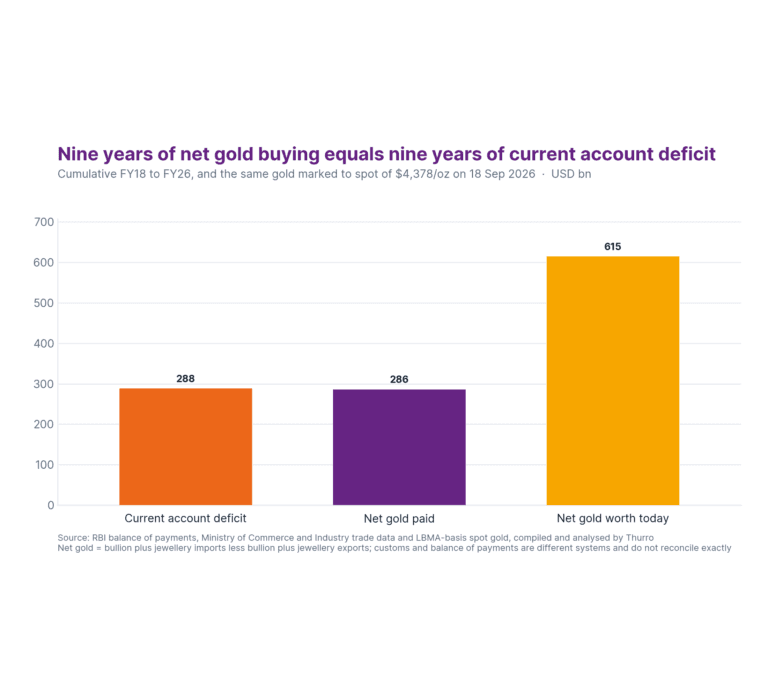
Nine years of net gold buying equals nine years of current account deficit — and it has doubled in value
India paid out $286bn for net gold between FY18 and FY26. Its cumulative current account deficit over the…
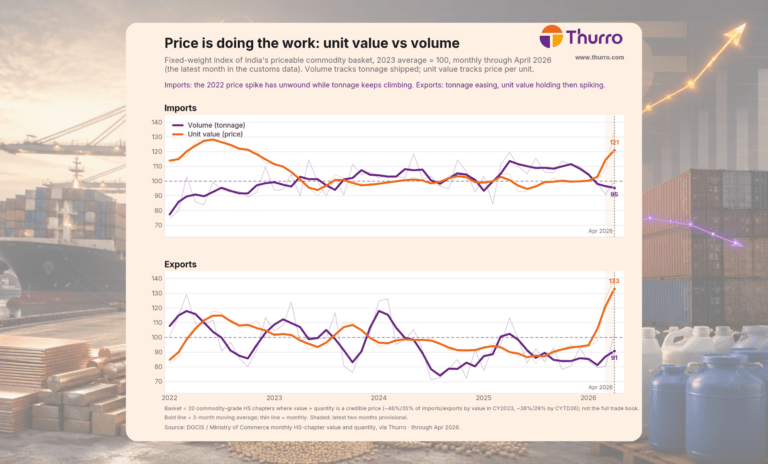
India’s commodity trade is running on price, not volume
India's trade value is still climbing — imports up about 18 percent and exports about 8 percent in…
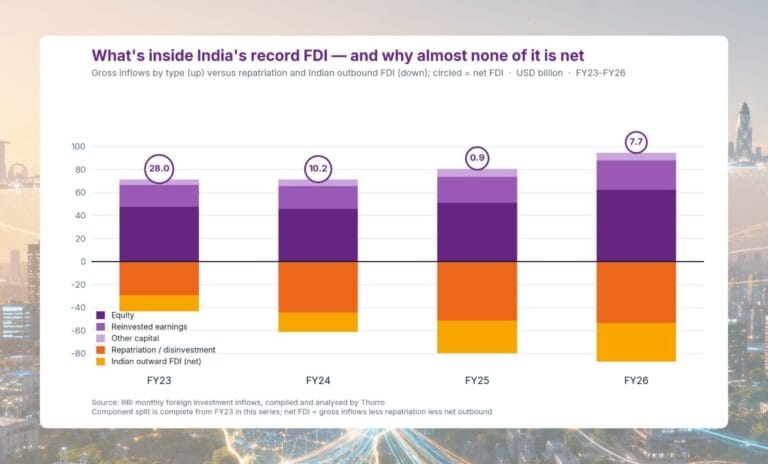
India’s net FDI has all but vanished — even as foreign money keeps pouring in
FY26 balance-of-payments data is in: gross inflows hit a record, yet net FDI is barely above zero. What's…