


This analysis is based on Thurro’s AI-led reading of Union Budget speeches between FY2020 and FY2026. Instead of examining each Budget as a standalone event, Thurro’s AI-driven platform processes Budget speeches across years, allowing shifts in language, structure, emphasis, and time horizon to be identified at scale.
By structuring Budget documents into a searchable, comparable database and applying AI-assisted thematic and linguistic analysis, Thurro enables patterns to emerge that are difficult to detect through manual reading alone. This approach makes it possible to trace how the function of the Union Budget itself has evolved over time—beyond individual announcements or headline measures.
This piece reflects that longitudinal method: reading Budgets together, rather than year by year, to understand how their role, framing, and ambition have changed.
Over the past seven years, the Union Budget has undergone a discernible shift in role, tone, and intent. Thurro’s AI-based analysis of Budget speeches across these years, available on its platform, shows a progression— from a platform for near-term strategic macroeconomic steering and sectoral resource allocation to a crisis stabiliser, to a narrative anchor, and finally to a document increasingly focused on long-term economic architecture.
Phase I: The baseline (FY2020-FY2021)
The FY2020 regular Budget was presented by Finance Minister Nirmala Sitharaman on 19 July 2019, marking the beginning of the NDA government’s second term. It provides a useful reference point for what the Union Budget looked like before disruption of the pandemic reshaped its function.
Delivered in a period of relative macroeconomic normalcy, the FY2020 speech followed a familiar pattern. It focused on growth aspirations, sectoral initiatives, and incremental reform. The language was forward-looking but measured, framed around boosting investment, supporting consumption, and continuing structural reforms already underway.
At the same time, the speech introduced an explicit long-term aspiration—the vision of a USD 5 trillion economy. While this goal setting remained directional rather than architectural, it signalled an early attempt to frame annual policy within a broader developmental ambition, captured in the framing of Building New India.
The tone was measured rather than urgent, and although longer-term ambitions were clearly articulated—including decade-long economic goals—the Budget’s organising logic remained anchored in the annual fiscal cycle. Strong emphasis was placed on delivery and implementation, including last-mile reach of government programmes, but these priorities were addressed within the existing fiscal framework. The document functioned primarily as a platform for setting near- to medium-term priorities, adjusting policy levers, and signalling intent to markets and households.
The FY2021 Budget extended this framework. Framed around Ease of Living, it emphasised continuity of welfare delivery, support for vulnerable households, and the maintenance of public investment. The Budget maintained the same three-pillar structure established in FY2020, with a focus on boosting incomes, enhancing purchasing power, and supporting higher growth to enable meaningful employment.
This phase serves as the baseline: Budget speeches that prioritised near-term policy direction while articulating longer-term ambition and delivery priorities.
Phase II: The shock absorber (FY2022)
The FY2022 Budget speech marked a sharp break, shaped by exceptional circumstances. Delivered during the Covid-19 pandemic, it reflected uncertainty, disruption, and the need for institutional reassurance.
The language shifted decisively toward protection and resilience. The speech explicitly acknowledged disruption, loss, and collective endurance. Health systems, food security, income support, and emergency measures were framed as essential to holding the economic and social fabric together.
A key organising frame during this period was Atmanirbhar Bharat, or self-reliant India. Emergency measures were presented through this lens, positioning self-reliance as both a response to crisis and a demonstration of governance capacity.
Policy announcements in this phase were presented less as reforms and more as stabilisers. The Budget’s role was to signal governance capacity, enable extraordinary intervention, and reinforce legitimacy at a moment of systemic stress.
Here, the Union Budget functioned primarily as a shock absorber—designed to contain damage and restore confidence rather than reshape long-term structure.
Phase III: The narrative anchor (FY2023–FY2024)
From FY2023 onwards, the Budget’s framing began to expand beyond crisis response.
The introduction of Amrit Kaal marked a further extension of the Budget’s time horizon within India’s national narrative. Framed as the 25-year period leading to the centenary of independence, it expanded on the earlier decade-scale ambitions by situating annual policy decisions within a clearly articulated multi-decade trajectory of recovery, aspiration, and national direction. The tone in these years shifted toward confidence. References to economic rebound, India’s global standing, and comparative performance became more frequent. Infrastructure expansion, digital public platforms, and energy transition initiatives were increasingly discussed as steps along a defined national journey of continued economic growth rather than as standalone annual measures.
In this phase, the Budget assumed the role of a narrative anchor. It linked the immediate post-crisis present to a longer arc of development, using language and framing to give coherence and meaning to policy choices across years.
Phase IV: The system architect (FY2025–FY2026)
By FY2025 and FY2026, the evolution became structural. The Budget speeches in these years reflected a clear movement from broad themes toward formal frameworks. Early pillars and narrative priorities were reorganised into explicit engines of growth. The FY2026 Budget, in particular, articulated a structured architecture in which agriculture, MSMEs, investment, and exports were framed as engines.
Within this structure, Reforms as the Fuel emerged as an explicit organising principle, reinforcing the idea that governance and institutional change were necessary to power these engines.
The language became more enumerated and programmatic. Policy domains were broken into categories, missions, and sequences. Emotional appeals receded, replaced by institutional logic and internal coherence.
The time horizon extended decisively. Repeated references to 2047 embedded the Budget within a multi-decade planning frame, shifting attention away from year-on-year adjustment toward how different components of the economy are expected to interact over time.
In this phase, the Budget functioned as a system-design document, outlining economic architecture rather than responding to immediate disruption or narrating recovery.
What this evolution signals
Across FY2020 to FY2026, the Union Budget follows a clear progression:
- A conventional annual fiscal exercise
- A stabilising instrument during crisis
- A narrative device anchoring recovery and aspiration
- A framework for long-term economic organisation
This evolution does not speak to outcomes or effectiveness. It reflects a change in how the state conceives the Budget itself—less as a one-year statement and more as a planning and signalling instrument over time. The shift is gradual, but it is visible in how the document’s language, structure, and time horizon change over time.
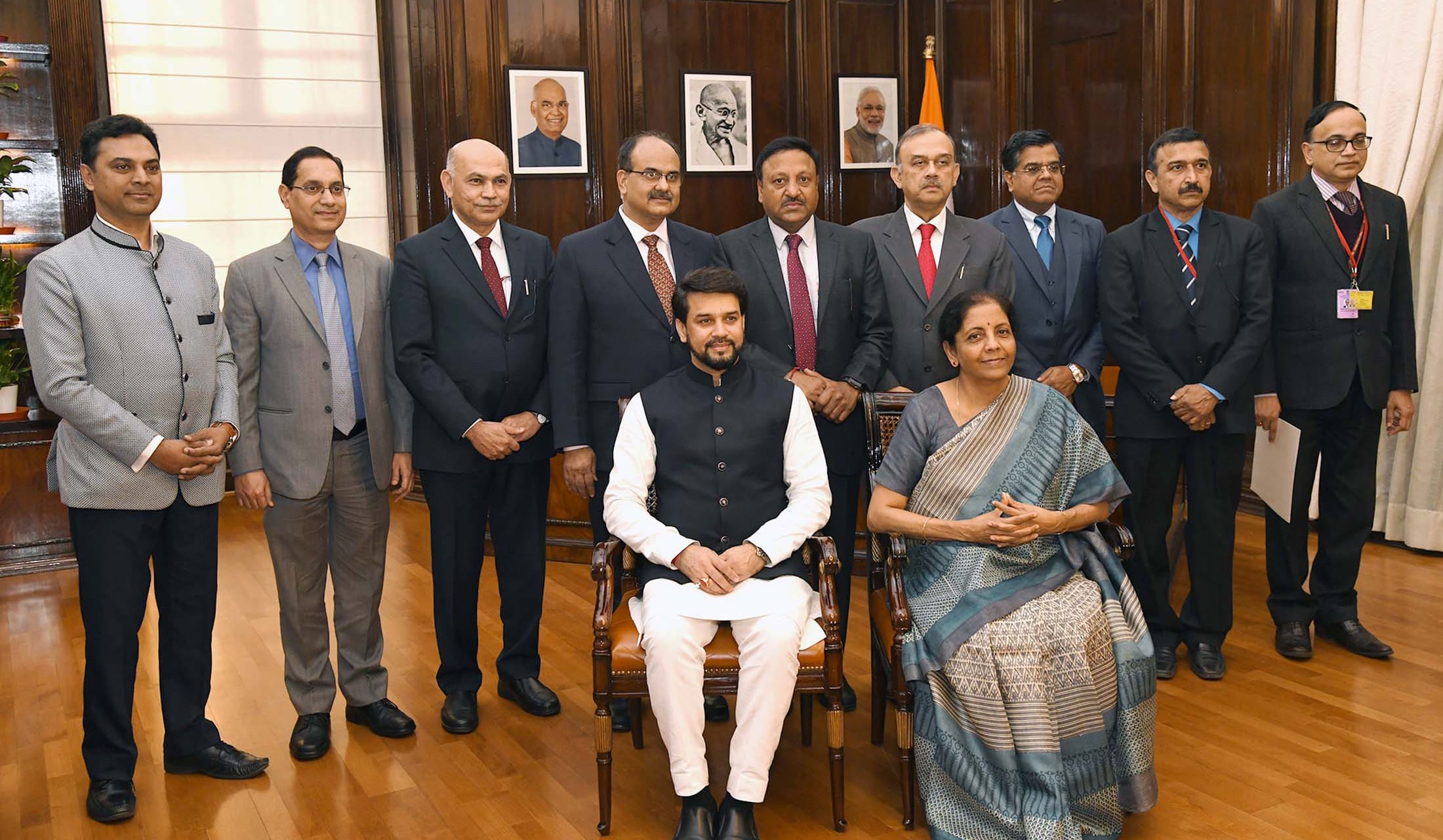
Cover photo credit: PIB (Finance Minister Nirmala Sitharaman and team finalise the 2020-21 Budget)
View disclaimer
Next: How successive Budgets have redefined their intended audience and economic priorities
This is the first in a series of Thurro analysis notes in the run-up to the Union Budget 2026. You can explore the underlying analysis interactively on our Thurro Answers Notebook or download the PDF version below to read offline.
Unlock the power of alternative data
Do not just follow the market — stay ahead of it. Thurro helps you transform raw filings and alternative datasets into actionable insights.
Explore Thurro AltData Book a demoRelated Articles
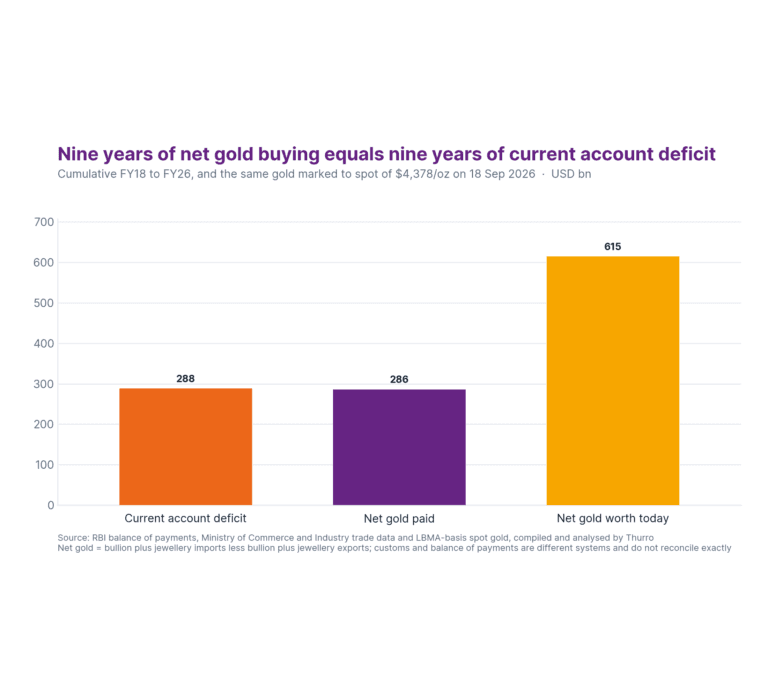
Nine years of net gold buying equals nine years of current account deficit — and it has doubled in value
India paid out $286bn for net gold between FY18 and FY26. Its cumulative current account deficit over the…
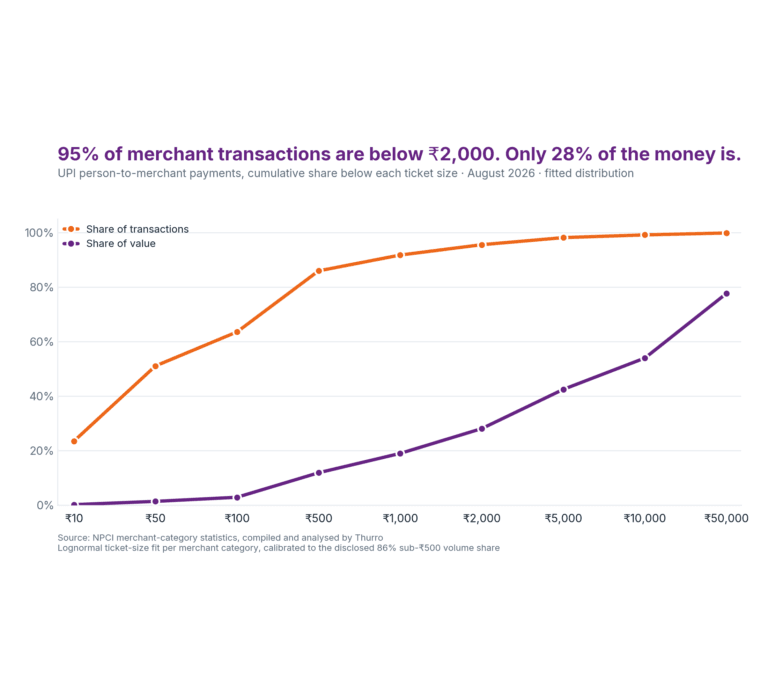
The UPI MDR pool is about ₹1,000 crore a month, and two-thirds of it sits where nobody can see it
Parliament has cleared the way for merchant charges on UPI. The merchant-category data says the revenue is real…
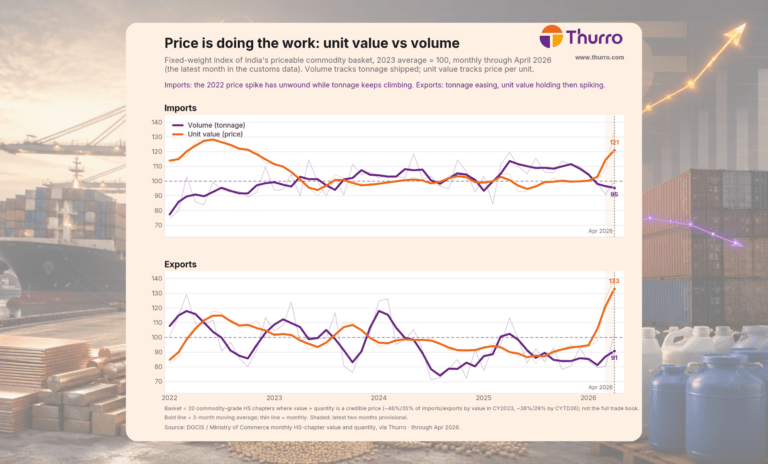
India’s commodity trade is running on price, not volume
India's trade value is still climbing — imports up about 18 percent and exports about 8 percent in…