


This analysis is based on Thurro’s AI-led reading of Union Budget speeches between FY2019 and FY2026. Instead of examining each Budget as a standalone event, Thurro’s AI-driven platform processes Budget speeches across years, allowing shifts in language, structure, emphasis, and time horizon to be identified at scale.
By structuring Budget documents into a searchable, comparable database and applying AI-assisted thematic and linguistic analysis, Thurro enables patterns to emerge that are difficult to detect through manual reading alone. This approach makes it possible to trace how the function of the Union Budget itself has evolved over time—beyond individual announcements or headline measures.
Earlier in this series, we analysed how the Budget speeches have evolved over time, how they redefined their intended audience, and employment over the years. In this note, we analyse how emphasis, sentiment, and policy framing around key sectors have evolved between FY2019 and FY2026 beyond individual announcements or headline allocations.
Isolated reading of annual Budget speeches can often appear reactive. A more stable picture emerges once they are read across years and sector. Despite shifts in macroeconomic conditions—from pre-pandemic growth to crisis response to system design—some sectors recur with consistency. What changes is how the state uses these sectors in its growth narrative.
Agriculture: from income support to resilience and value chains
Across FY2019–FY2026, agriculture has remained a constant presence in Budget speeches, but its framing has evolved steadily.
In the earlier years (FY2019–FY2021), sentiment has been anchored in income protection and stability, frequently framed around the objective of doubling farmers’ income. Budget speeches have repeatedly referenced minimum support prices, direct income transfers, crop insurance, and irrigation, and expanding agricultural credit targets. Farmers have been framed primarily as recipients of state support, with policy language emphasising security, predictability, and income assurance.
In the post-pandemic phase (FY2023 onwards), the emphasis has shifted. Agriculture has increasingly been discussed through the lens of infrastructure, value chains, and resilience. Credit, in this phase, appeared less as an income buffer and more as an enabler of investment—supporting agri-infrastructure, processing capacity, and market integration rather than merely meeting annual targets. Recurrent references have emerged to agri-logistics, warehousing, cold chains, digital agriculture, and post-harvest management. Initiatives such as Shree Anna reinforced this shift, explicitly linking diversification and millets to nutrition, resilience, and value-chain development. The language has moved away from price support alone toward productivity, diversification, and integration with markets.
As this framing has evolved, a clear set of sub-sectors has consistently moved into the foreground, including:
- Irrigation and micro-irrigation
- Warehousing and cold storage
- Agri-processing and food processing
- Agri-logistics and rural infrastructure
This shift in emphasis has had direct implications for companies operating in:
- Farm mechanisation and irrigation equipment such as Escorts Kubota, Mahindra & Mahindra, TAFE, VST Tillers Tractors, etc.
- Agri-inputs and fertilisers such as Bayer CropScience, Chambal Fertilisers, Coromandel International, PI Industries, Rallis India, UPL, etc.
- Food processing and agri-logistics such as Adani Wilmar, Britannia Industries, Dabur India, ITC, Patanjali Foods, Snowman Logistics, etc.
Overall, the sentiment has evolved from protection toward durability—positioning agriculture first as a stabiliser and later as a resilient economic system.
A deeper sectoral reading of agriculture is available in the accompanying Thurro Notebook or download the PDF version below to read offline
Infrastructure: from stimulus spending to system backbone
Infrastructure has been among the most consistently emphasised sectors across Budget speeches, but its assigned purpose has changed over time.
Between FY2019 and FY2021, infrastructure was framed primarily as a growth and stimulus lever, most visibly through the national infrastructure pipeline, envisaging INR 100 trillion of investment over multiple years. Capital expenditure, road construction, rail expansion, and urban infrastructure were justified through multiplier effects and immediate economic activity.
From FY2022 onwards, the framing has become more architectural. Infrastructure has increasingly been discussed as a system—covering logistics corridors, multimodal transport, urban platforms, and integrated planning. This shift was most explicit through initiatives such as PM Gati Shakti, which emphasised coordination across ministries, modes of transport, and execution timelines . Capital expenditure was sustained at above INR 10 trillion (3–3.4% of GDP) by FY2023–FY2024, alongside system-wide capacity targets such as three economic railway corridors spanning nearly 40,000 km of track. References to coordination, efficiency, and long-term capacity have featured more prominently than headline spending numbers.
This evolution has increasingly aligned infrastructure policy with a defined set of execution-heavy companies and platforms. Companies most directly aligned with this shift include:
- EPC and integrated infrastructure firms such as L&T, Shapoorji Pallonji, and Tata Projects, etc., positioned across roads, rail, water, and urban systems
- Transport and logistics operators such as Allcargo, Ashoka Buildcon, CONCOR, and IRB Infrastructure, etc., aligned with corridor-based and multimodal planning
- Power and transmission players such as NPCIL, NTPC, and POWERGRID, etc., tied to grid modernisation and nuclear expansion
- Urban infrastructure specialists such as VA Tech Wabag, aligned with water and sanitation system build-out
- Platform and geospatial technology firms such as Infosys, TCS, and Wipro, embedded in PM Gati Shakti and digital infrastructure design
The sentiment has moved from “build more” toward “build better and connected”.
A deeper sectoral reading of infrastructure is available in the accompanying Thurro Notebook or download the PDF version below to read offline
Manufacturing: from expansion to competitiveness
Manufacturing has retained a central role across Union Budget speeches, consistently positioned as critical to growth, even as its narrative purpose has evolved.
In the earlier phase (FY2019–FY2021), Budget speeches emphasised scale, capacity expansion, and domestic production. The language focused on building manufacturing depth within India, encouraging investment in plants, capacity creation, and import substitution. Manufacturing was framed primarily as a volume-driven growth lever.
From FY2022 onwards, the emphasis shifted decisively. The language moved toward competitiveness, quality, and integration into global value chains, with the Production-Linked Incentive framework positioned as the primary mechanism linking scale, output, and export competitiveness. The PLI framework spanned 13 sectors with an outlay of over INR 1.9 trillion over five years, intended to scale manufacturing capacity and generate millions of direct and indirect jobs.
As this emphasis evolved, Budget priorities aligned closely with firms operating at the intersection of incentives, exports, and global supply chains. Companies repeatedly situated closest to this policy architecture included:
- Electronics and EMS manufacturers such as Amber Enterprises, Dixon Technologies, Kaynes Technology, PG Electroplast, and Syrma SGS Technology, etc.
- Automobile and EV manufacturers and suppliers including Amara Raja Energy & Mobility, Bajaj Auto, Exide Industries, Mahindra & Mahindra, Tata Motors, and TVS Motor, etc.
- Pharmaceutical manufacturers such as Aurobindo Pharma, Biocon, Cipla, Dr. Reddy’s Laboratories, Glenmark Pharmaceuticals, Lupin, and Sun Pharmaceutical Industries, etc.
- Textile and apparel firms including Arvind, Page Industries, Trident, Vardhman Textiles, and Welspun India, etc.
- Capital goods and industrial manufacturers such as ABB India, BHEL, Cummins India, Larsen & Toubro, and Siemens India, etc.
In the later Budgets (FY2023–FY2026), manufacturing was framed less as a domestic output engine and more as a vehicle for export. Standards, productivity, supply-chain integration, and export competitiveness replaced capacity expansion as the dominant themes.
Overall, the sentiment has evolved from expansion toward competitiveness—positioning manufacturing not merely as a source of domestic growth, but as a system through which India integrates into global production networks.
A deeper sectoral reading of manufacturing is available in the accompanying Thurro Notebook or download the PDF version below to read offline
MSMEs: from survival to engines of employment
Micro, small, and medium enterprises (MSMEs) have undergone one of the clearest framing shifts in Budget speeches over the last eight years.
During the crisis years (FY2020–FY2022), the language was explicitly protective. Liquidity support, emergency credit, loan guarantees, and survival dominated the narrative. MSMEs were framed as vulnerable yet essential to economic continuity, with delivery channels routed through institutions such as SIDBI, National Credit Guarantee Trustee Company (NCGTC), public sector banks, and participating NBFCs.
In the subsequent years (FY2023–FY2026), the framing became more aspirational and structural. MSMEs were described as engines of employment, contributors to exports, and integral parts of supply chains. Digital platforms, formalisation, and scale emerged as recurring themes, with repeated references to GeM (Government e-Marketplace), TReDS (Trade Receivables Electronic Discounting System) platforms, and digitally enabled compliance and procurement systems.
The framing extended across manufacturing and services MSMEs, export-oriented small firms, and small enterprises whose sales, payments, or procurement increasingly depend on large digital platforms, reflecting a broadening view of MSMEs’ role in the economy.
This evolution shaped demand most directly for:
- MSME lenders and refinancing institutions, including SIDBI, public sector banks, and NBFCs
- Digital commerce, accounting, and compliance platforms integrated with GeM and formalisation frameworks
Supply-chain and procurement aggregators, including large CPSE buyers such as BHEL, IOCL, NTPC, and ONGC, serving as institutional gateways for MSME procurement and payment compliance.
A deeper sectoral reading of MSMEs is available in the accompanying Thurro Notebook or download the PDF version below to read offline
Energy: from capacity creation to transition and security
Energy policy has evolved from capacity creation toward transition and security.
In the earlier years (FY2019–FY2021), framing focused on access and capacity. From FY2022 onwards, energy policy increasingly aligned with the green growth framework, with the language shifting decisively toward renewables, energy transition, and security. Storage, grid modernisation, and system resilience have increasingly dominated the narrative.
Sub-sectors that find repeated mentions and emphasis across the years include:
- Solar and wind energy
- Renewable manufacturing
- Green hydrogen
- Energy storage and transmission
This shift reshaped the operating landscape most directly for:
- Renewable energy developers, including Adani Green Energy, NTPC (renewables and transition-linked projects), ReNew Power, and Tata Power, etc.
- Equipment and component manufacturers, such as BHEL, Inox Wind, Premier Energies, Suzlon Energy, and Waaree Energies, etc., positioned around domestic manufacturing and localisation
- Grid, storage, and transmission firms, including Adani Transmission, Power Grid Corporation of India, and Tata Power, etc., aligned with grid modernisation and system resilience
Overall, the sentiment moved from expansion toward future-proofing—positioning energy policy around transition readiness, security, and long-term system stability.
A deeper sectoral reading of energy is available in the accompanying Thurro Notebook or download the PDF version below to read offline
Technology and the digital economy: from projects to infrastructure
Technology’s role has expanded significantly across Budget speeches.
Initially framed around digitisation of services, it has evolved into digital public infrastructure. Platforms, data systems, and interoperability have become central, positioning technology not merely as a sector but as an enabler across agriculture, finance, healthcare, and education.
Sub-sectors have been repeatedly foregrounded, including:
- Fintech and payments
- Govtech platforms
- AI-enabled productivity tools
- Data and digital infrastructure
This evolution has aligned most closely with companies building scalable platforms and digital rails, including Reliance Jio in digital connectivity, Paytm, PhonePe, and Google Pay in digital payments, Tata Electronics and Micron Technology in electronics and semiconductors, and education-technology firms such as BYJU’S and Unacademy building on public digital infrastructure for learning and skilling.
In later years, the emphasis on AI, deep-tech, and private-sector-led innovation has further extended exposure to frontier technology firms and startups operating in artificial intelligence, data infrastructure, and platform-based ecosystems, supported by large-scale policy instruments such as the PLI schemes, the IndiaAI Mission, and the INR 1 trillion Research, Development and Innovation framework.
A deeper sectoral reading of technology is available in the accompanying Thurro Notebook or download the PDF version below to read offline
Healthcare: from access to preparedness
Healthcare sentiment has shifted sharply after FY2020. Earlier Budgets focused on affordability and access, anchored around universal health coverage. Later speeches increasingly framed healthcare as a system—emphasising capacity building, diagnostics, surveillance, digital health, and preparedness.
This evolution shaped the operating environment most directly for:
- Pharmaceutical manufacturers, including Cipla, Dr. Reddy’s Laboratories, Lupin, and Sun Pharma, etc., aligned with essential medicines, domestic manufacturing, and innovation-linked initiatives
- Diagnostics providers such as Dr. Lal PathLabs, Metropolis Healthcare, and Thyrocare, etc., positioned around expanded testing, preventive care, and system-wide diagnostics capacity
- Medical device manufacturers, including and Poly Medicure and Sahajanand Medical Technologies, etc., linked to localisation and domestic capability building
- Healthcare infrastructure and hospital operators such as Apollo Hospitals, Fortis Healthcare, and Narayana Health, etc., operating within expanded capacity, PPP frameworks, and medical education integration
Overall, the sentiment evolved from access provisioning toward system preparedness, positioning healthcare not only as a welfare function but as critical national infrastructure.
A deeper sectoral reading of healthcare is available in the accompanying Thurro Notebook or download the PDF version below to read offline
Education and skilling: from enrolment to employability
Education and skilling have appeared consistently, but their role has evolved from access toward alignment.
In the earlier years (FY2019–FY2021), emphasis lay on enrolment, institutional expansion, and foundational capacity. In later Budgets (FY2022–FY2026), the language shifted toward industry linkage, skilling pipelines, digital delivery, and workforce readiness.
Across Budget speeches, education and skilling have increasingly been framed through three connected layers. Vocational training and apprenticeships have been emphasised as the primary bridge to employment. Digital skilling platforms have gained prominence as scalable delivery mechanisms. More recently, industry-linked education providers and public–private partnerships have been positioned as the channel through which skills translate into workforce readiness.
This evolution has had direct exposure implications for:
- Global and domestic technology firms partnering on skilling such as Amazon Web Services (AWS), Cisco, IBM, Microsoft, etc.—through formal MoUs for AI, cloud, cybersecurity, and digital skills training
- Private vocational and training providers operating within PMKVY centres, ITIs, and National Apprenticeship Promotion frameworks
- Digital education and content platforms supplying multilingual content, learning management systems, and assessment tools aligned with NEP, PM e-VIDYA, and Digital University initiatives
Overall, the sentiment has moved from expanding seats to engineering employability — positioning education not as a social sector alone, but as core economic infrastructure.
A deeper sectoral reading of education is available in the accompanying Thurro Notebook or download the PDF version below to read offline
Financial sector: from stability to depth
Across FY2019–FY2026, the financial sector has been framed less as an end in itself and more as a conduit for growth. Budget speeches during FY2019–FY2021 emphasised financial stability, balance-sheet repair, and inclusion. From FY2022 onwards, the framing shifted toward depth, efficiency, and capital transmission to productive sectors, with later Budgets (FY2024–FY2026) increasingly positioning the financial system as economic infrastructure rather than a standalone growth engine.
The most recent Budgets have focused on digital banking, fintech-led inclusion, capital-market deepening, and institutional reforms to improve credit flow to MSMEs, infrastructure, and emerging sectors.
Within this framing, certain institutions and platforms have appeared repeatedly or been directly referenced, including public sector banks, LIC (notably through its IPO), IDBI Bank (via disinvestment and restructuring), and system-level fintech rails such as UPI, India Stack, and digital banking units. Rather than spotlighting individual private firms, the speeches have consistently highlighted financial infrastructure and regulated institutions as the primary transmission mechanisms.
Banks, NBFCs, fintech platforms, and capital-market intermediaries have thus been positioned as enablers—tasked with carrying policy intent into the real economy—rather than as standalone growth drivers in their own right.
A deeper reading of financial sector is available in the accompanying Thurro Notebook or download the PDF version below to read offline
Exports: from promotion to integration
Export policy has evolved from incentive-led promotion toward competitiveness and global integration.
In the earlier phase (FY2019–FY2021), Budget speeches stressed refunds, duty remission, and export incentives, with schemes such as MEIS, RoSCTL, and interest equalisation aimed at easing immediate cost pressures for exporters.
From FY2022 onwards, the emphasis shifted decisively toward logistics efficiency, quality standards, and integration into global value chains. Later Budgets increasingly framed exports through infrastructure, digital trade platforms, and production-linked ecosystems rather than standalone incentives.
Across FY2019–FY2026, repeated attention has fallen on a core set of export-oriented sub-sectors:
- Textiles and apparel
- Electronics and technology products
- Chemicals and pharmaceuticals
- Engineering goods
- Marine products
This shift has mattered most for export-facing manufacturers and logistics-linked firms. Companies most directly aligned with policy direction include Arvind Limited, Avanti Feeds, Bharat Forge, Dixon Technologies, Sun Pharmaceutical, and Welspun India, etc., all of which have operated in sectors repeatedly foregrounded through PLI schemes, duty rationalisation, and the Export Promotion Mission.
Overall, the sentiment has evolved from supporting exports as a transactional activity to embedding them as a structural pillar of growth—where scale, standards, and system integration increasingly determine outcomes.
A deeper sectoral reading of exports is available in the accompanying Thurro Notebook or download the PDF version below to read offline
What this sectoral evolution reveals
While the same sectors feature in Budget speeches across FY2019–FY2026, their role has changed, moving from relief toward productivity, from spending toward systems, and from expansion toward resilience. Read together, these shifts reveal a state that relies on a stable sectoral core, progressively layering more complex expectations onto it as the economy moves from recovery to long-term design.
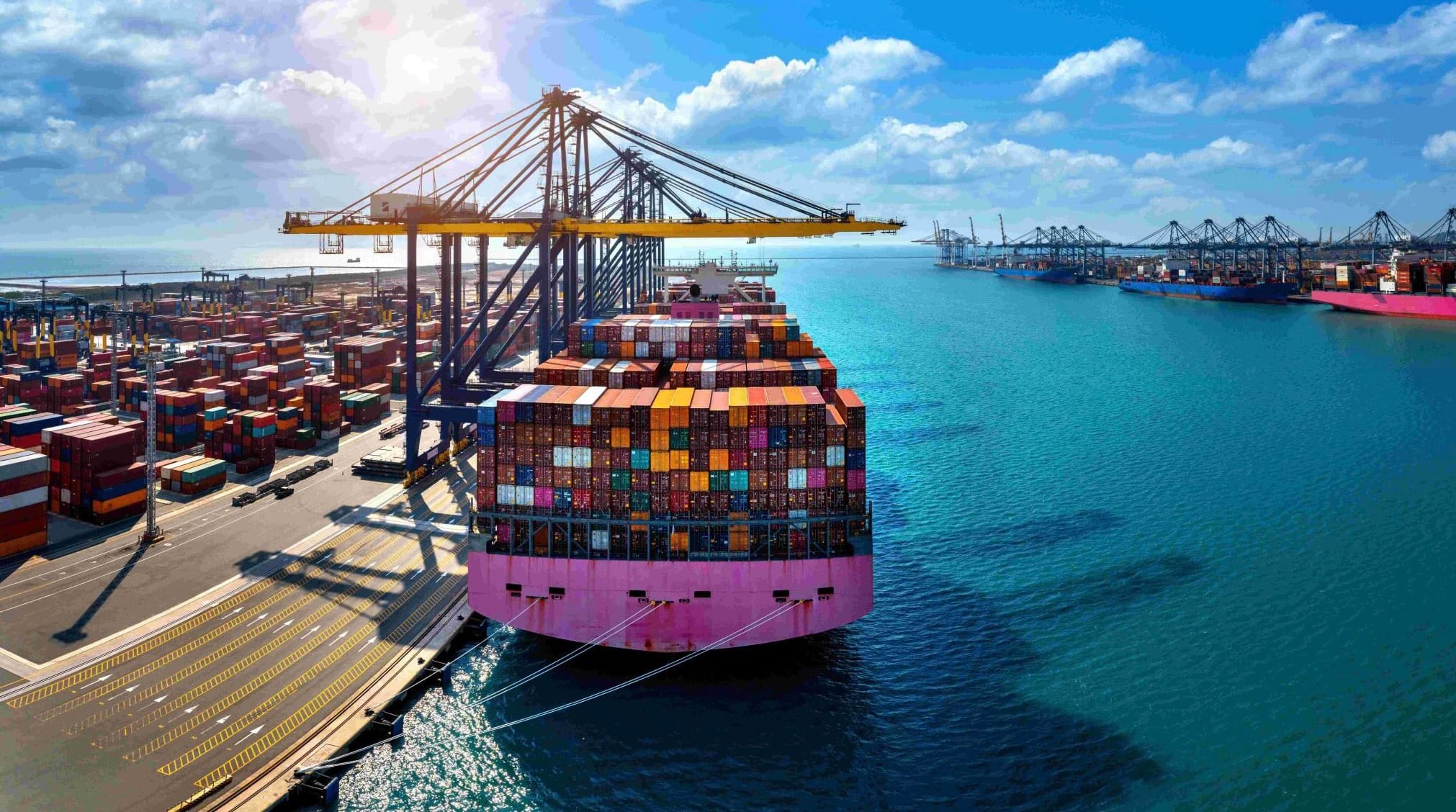
Cover photo credit: Cargoline website
View disclaimer
This is the fourth in a series of Thurro analysis notes in the run-up to the Union Budget 2026.
Unlock the power of alternative data
Do not just follow the market — stay ahead of it. Thurro helps you transform raw filings and alternative datasets into actionable insights.
Explore Thurro AltData Book a demoRelated Articles

India’s consumption story is deepening
India’s consumption base is widening, formalising, and upgrading, strengthening balance sheets and shifting demand toward higher-value categories

US bankruptcy filings rise 13% in Sep-Dec 2025
Over the past 12 quarters, filings have recorded double-digit annual growth in all but one quarter
A tale of two markets
Cash equities are increasingly delivery-led, even as derivatives premium turnover surges, revealing a bifurcated market structure beneath speculation…