

AI Financial Research Assistant Built for Decision-Grade Intelligence
Thurro Answers is an AI financial research assistant designed for institutional decision-makers who require accuracy, transparency, and speed in their research workflows. It enables users to ask complex financial, regulatory, and strategic questions and receive precise, source-verified answers grounded in curated data—without relying on generic web-trained AI models.
Built on a proprietary data lakehouse covering millions of daily data points across financial filings, regulatory disclosures, transcripts, and alternative datasets, Thurro Answers transforms fragmented information into decision-ready intelligence. Every response is traceable to its original source, allowing analysts to validate insights, audit conclusions, and confidently act on findings.
The platform supports advanced research workflows through features such as unified intelligence queries, shareable research notebooks, automated task templates, conference call intelligence, and alert management. These capabilities help research teams reduce manual effort, accelerate analysis, and maintain consistency across investment research, market monitoring, competitive intelligence, and strategic planning.
Unlike generic AI chatbots, Thurro Answers is purpose-built for professional use—prioritizing explainability, data integrity, and institutional trust over speculative or unverified outputs.

Real-time insights grounded in regulatory data
Ask complex questions and get precise, source-backed answers
Key benefits

Unified intelligence
Query our vast DataLakehouse of curated documents and datasets

Source verification
Every answer comes with direct links to source documents, ensuring transparency and enabling deeper investigation

Save time
Eliminate manual searching and get crucial insights delivered directly and efficiently

Deep analysis
Leverage sophisticated data exploration capabilities for precise answers and advanced, actionable insights

Connected insights
Discover hidden connections across companies, sectors, and time periods with advanced relationship mapping

Context-aware analysis
AI that understands financial context and provides insights tailored to your specific research needs
Key features
Notebook
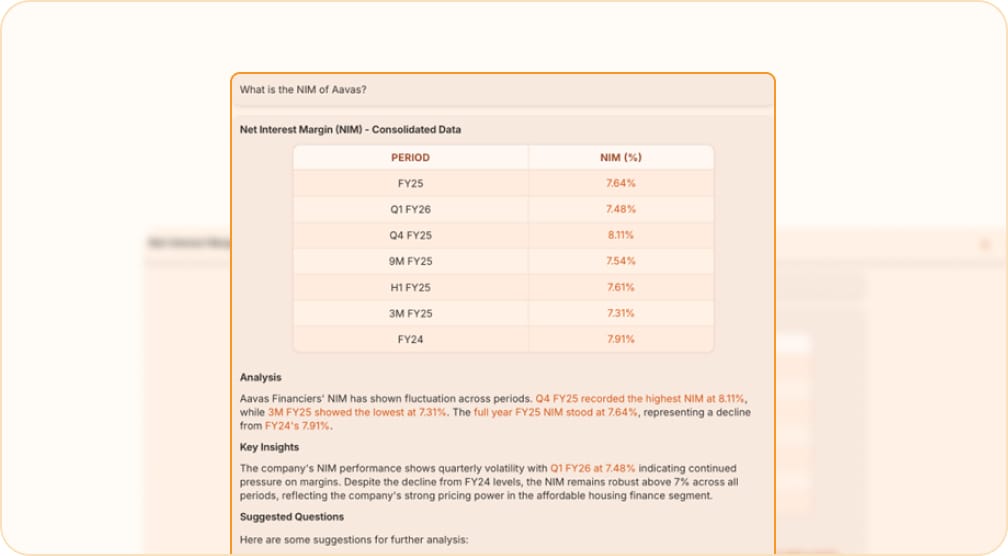
Every question creates a shareable Notebook — recipients with Thurro accounts can view and create editable copies in their workspace to continue the analysis
Tasks
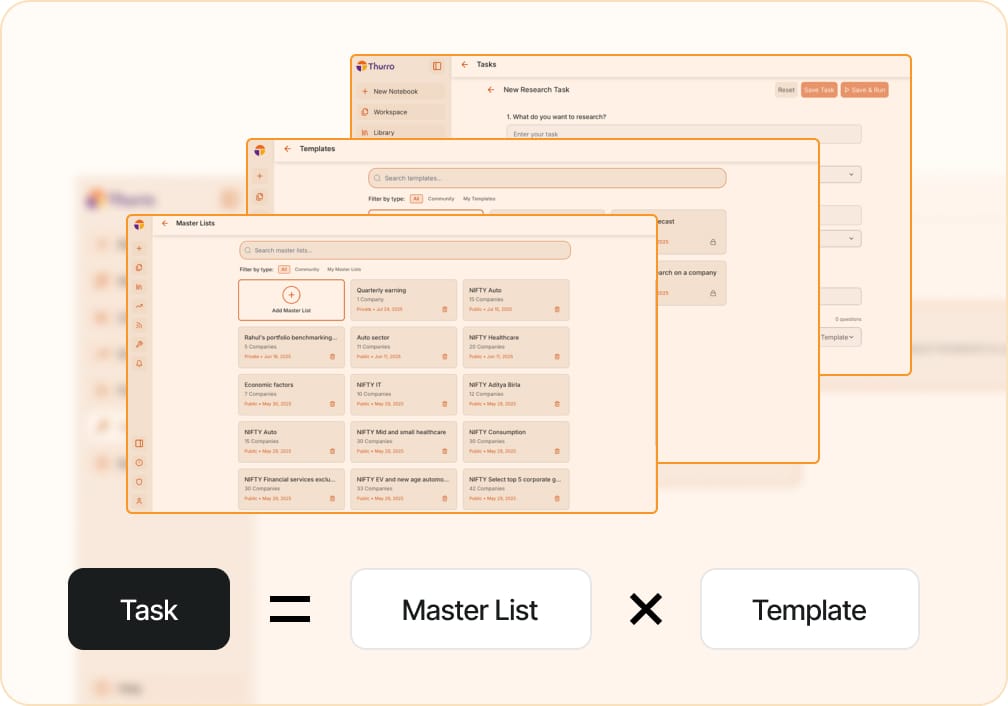
Tasks lets you combine pre-set questions (Templates) and tracked items (Master Lists) to run fully automated, repeatable research jobs in a single click
Conference Call Intelligence (CCI)
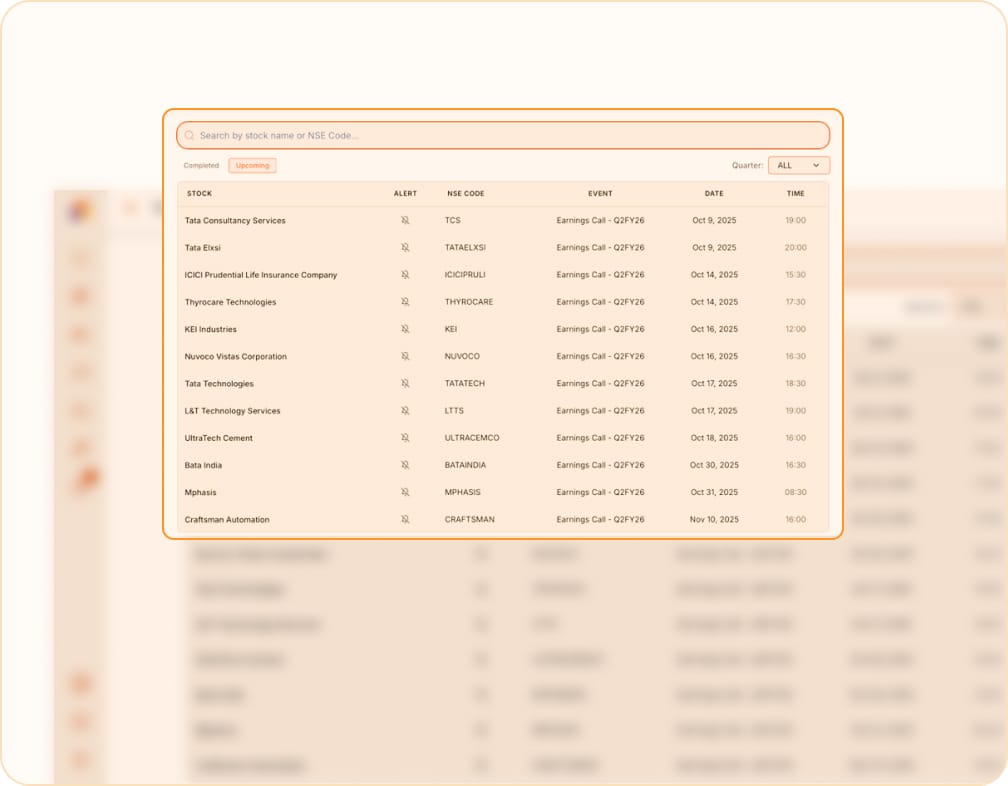
Unlock real-time analysis, intelligent navigation, custom summaries for every earnings call, giving you insights far beyond a basic transcript
Alert management
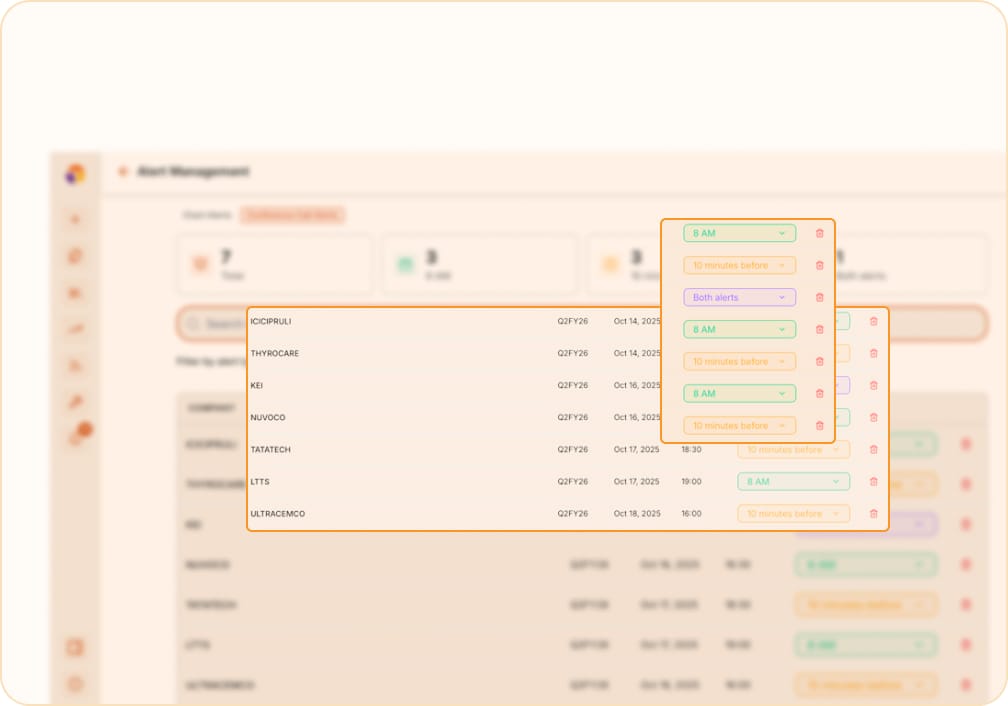
Provides a single, comprehensive dashboard to view and manage all your chart and conference call alerts
Thurro Answers in action
See how professionals across sectors use Thurro to solve complex research problems, faster, deeper, and with full traceability From financial analysis to competitive intelligence, market shifts to strategic planning — Thurro is built for real use cases, not generic demos

Financial analysis
Earnings breakdown with competing narratives and real-time updates

Market trends
Sector-wide analysis with predictive indicators and competitive positioning

Strategic planning
Competitive intelligence with cross-referenced sourcing and validation
Browse real Notebooks and explore the research behind the results.
Why Thurro Answers works better for decision-makers
Thurro AnswersPurpose-built for decision-makers | Generic AI chatbotsGeneral-purpose conversation |
 Curated DataLakehouseBuilt on 800+ authoritative sources, 25 million+ daily data points, 5+ years of Indian financial and alternative data |  Web-scraped trainingTrained on general internet data with limited financial or corporate depth and currency |
 Decision-ready insightsDelivers structured analysis, not shallow summaries. Every answer includes citations and sources |  Surface-level responsesProvides conversational answers without deep analysis or reliable source verification |
 Unified data analysisCombines structured and unstructured data: filings, transcripts, alternative data, market intelligence |  Limited data integrationCannot access real-time financial data, filings, or proprietary business intelligence |
 ReliabilityTransparently states what it does not know, offering only accurate, available data |  Hallucination riskMay generate plausible sounding but incorrect information, especially for specific queries |
 Domain expertiseOptimised for corporate strategy, M&A, equity research, and investment analysis |  General knowledgeBroad but shallow understanding across domains without specialised research capabilities |
 Workflow efficiencyStreamline your workflow with automated portfolio analysis (watchlists, templates), organized research notebooks, and efficient background processing for large-scale data |  Repetitive dragInefficient workflows often stem from manual, repetitive querying, a lack of systematic portfolio monitoring, inconsistent analysis frameworks, and the need for real-time interaction with |